Atlas essay · Wallowa Valley & Elgin · 2010–2012, with a 2026 source check
The long way home for Wallowa beef
A ranch needs a processor. A processor needs enough customers and skilled cutters. A restaurant needs cuts it can buy. Two Wallowa beef stories reveal how much of an agricultural economy happens after the animal leaves the pasture.
Editorial synthesis · 5 minute read · 4 sources
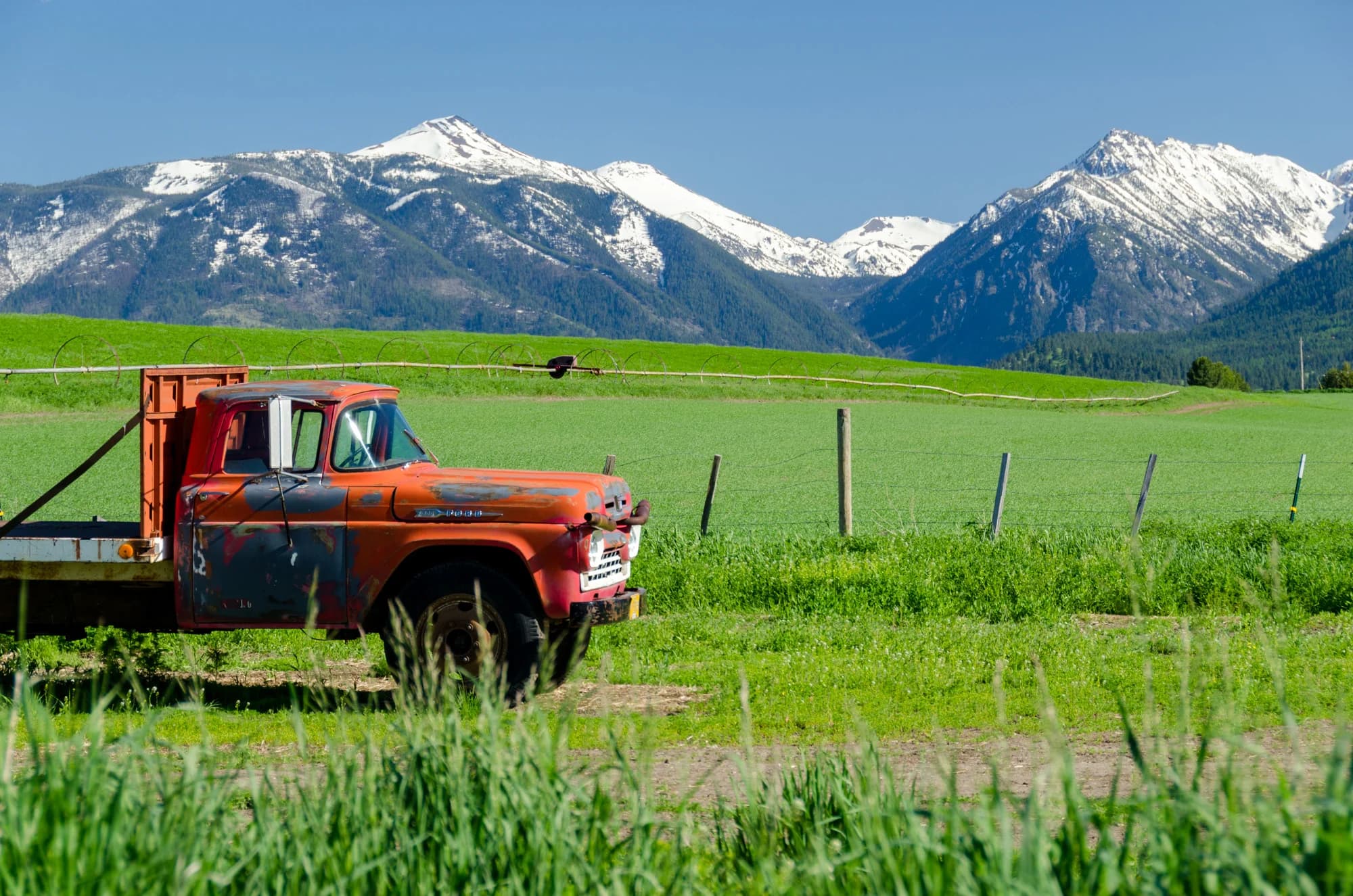
Working land near Enterprise. Landscape context; this photograph is not identified as 6 Ranch or Carman Ranch. Gary Halvorson, Oregon State Archives · 14 June 2011 · CC BY 4.0 · Image & source ↗
In this story 5 sections
Documented history
Cattle in the valley, a missing link in the chain
Joshua Russell’s 2012 Wallowa County food assessment described a distinction that is easy to miss from a pasture: producing an animal and placing meat in a retail counter require different arrangements. The report identified local custom-exempt processing and mobile slaughter, alongside the need to send retail-bound animals to inspected facilities outside the county.
The report described consumers purchasing animal shares for their own use through one route, and meat intended for resale through another. This is the system documented in 2012, not a guide to current licensing. It explains why a nearby processor could be useful to a household buying part of an animal while not meeting every restaurant’s purchasing needs.
A Western Organization of Resource Councils case study describes Oregon Rural Action working with Jeff Stafford in Elgin from 2010 toward federal inspection. The question was not simply whether producers wanted a closer facility. Stafford needed evidence of sufficient demand. Organizers surveyed producers and helped find technical assistance; the account dates approval to summer 2012.
Liza Jane Nichols of 6 Ranch was among the early users identified in that account. It also describes a continuing constraint: finding and retaining skilled meat cutters. Equipment and permission could make a service possible, while the availability of experienced workers still affected its operation.
This is an advocacy organization’s account of a project in which organizing played a role. It establishes a documented business transition alongside the food assessment. It is not an independent audit of either Stafford’s profitability or the ranchers’ earnings.
A closer look
The processing connection · 2010–2012
Ranch
6 Ranch: production, customer relationships, and marketing.
Processor
Stafford’s in Elgin: inspected slaughter and cutting, with skilled labor essential.
Market
Restaurants, retail customers, and a farm stand: different orders and quantities.
A schematic of documented roles, not a shipment map. The reports connect 6 Ranch to Stafford’s and describe local retail outlets, without tracing an individual animal through every step.
Cory Carman’s February 2011 essay offers a useful counterpoint. She wrote that the ranch’s beef was too expensive for prospective institutional buyers, with nearly 40 percent of its costs incurred after cattle left the ranch. She described finding a distributor that would handle whole-animal quantities and seasonal supply and provide access to a larger processing plant.
Carman reported an immediate 15 percent reduction in the price of the beef after those changes. Those figures belong to her account of that business at that time. They are not a countywide cost breakdown, a present price comparison, or a measured profit margin.
The two cases resist a simple conclusion that smaller and nearer is always better, or that scale alone is the answer. In one account, a closer inspected processor opened a route to market. In the other, a larger network helped a producer reach customers who could not afford the earlier price.
Carman Ranch’s website, examined in September 2026, describes several channels. Its cow-share program links animals from the family ranch with a nearby butcher and customers buying shares. Its wholesale description identifies a broader producer network and processing in Brownsville, Oregon. Its direct-sales description also includes partner ranches outside Wallowa County.
These are the business’s own current descriptions, on an undated page. They show why a regional brand should not automatically be counted as meat raised entirely within the county. They also show why a county boundary is an incomplete way to draw an industry: producers, processing, distribution, and customers can occupy different places.
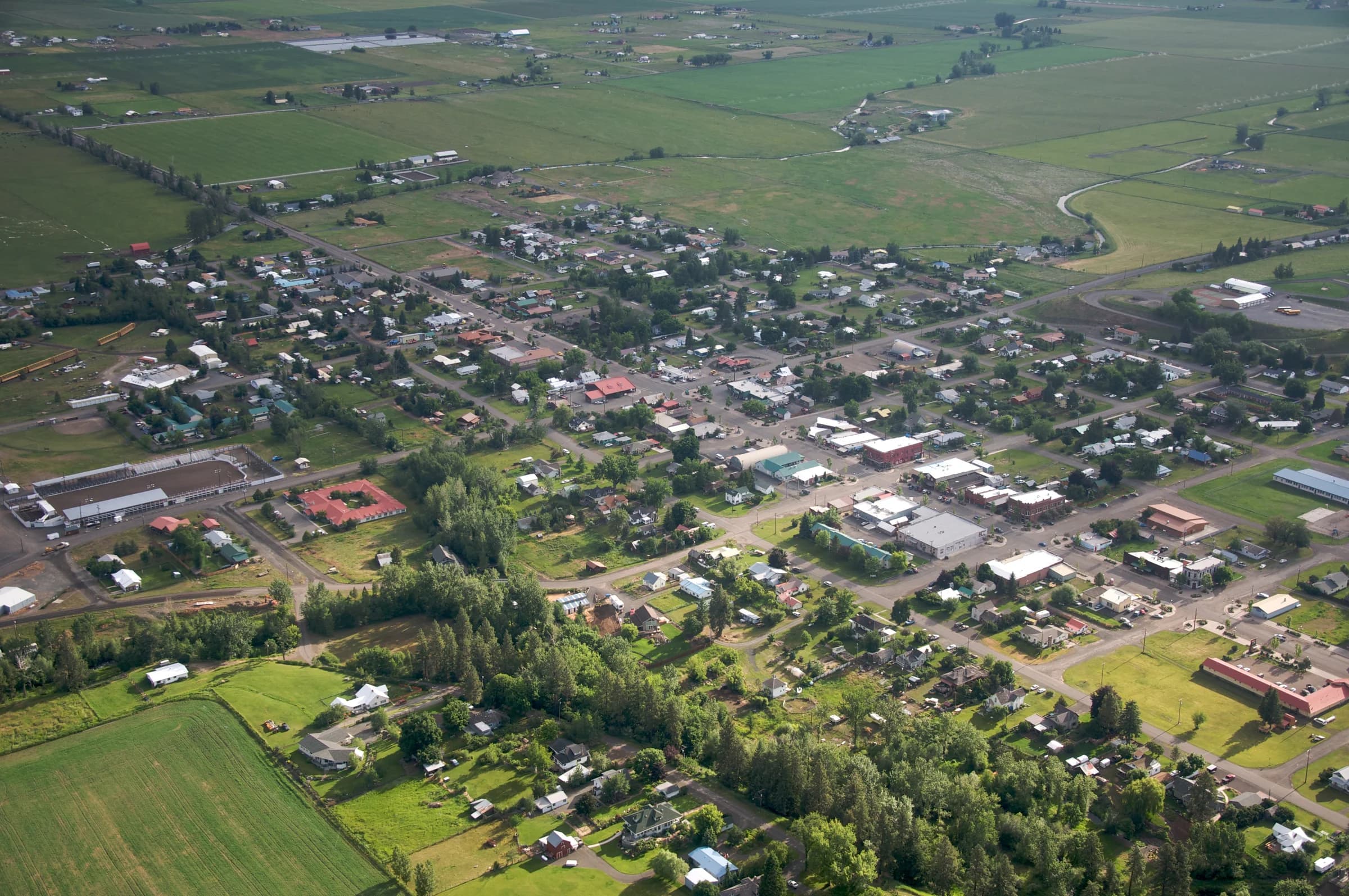
Joseph and its surrounding fields. A view of town and agricultural land, not evidence of a particular producer’s acreage or supply chain. Sam Beebe · 2007-07-08 · CC BY 2.0 · Image & source ↗
There are several different outcomes to measure. A ranch might receive a better price, a processor might employ more cutters, a distributor might reduce transport costs, or a shopper might pay less. These gains need not happen together. A higher sale price alone says little about a producer’s earnings without the costs of achieving it.
The same care applies to the word local. It can describe where the animal was raised, where processing happened, where the business is owned, or where the customer lives. A useful industry map identifies each relationship separately rather than assigning one local label to the entire chain.
The next evidence needed is practical: processing capacity, seasonal utilization, wages, transport arrangements, and the share of sales reaching different markets. The historical transition is clear enough to explain. Whether a new facility, a shared delivery route, or a different sales channel would work now requires a fresh business case. These stories supply the questions; they do not predetermine the investment.
Joshua Russell, RARE AmeriCorps; NEOEDD and Oregon Food Bank · Accessed 2026-09-13
Publication: 2012. Locator: Printed/PDF pp. 7–8 methodology; 12–13 6 Ranch; 16–18 processing and distribution. Year established internally by 2012 survey/report context; 2023 URL is upload path. Survey 133 respondents was not a probability sample. Regulations and businesses described historically, not current guidance.
Western Organization of Resource Councils · Accessed 2026-09-13
Publication: undated. Locator: Printed/PDF p. 21, Stafford’s upgrade from custom exempt to USDA-certified; p. 2 publisher statement. Advocacy network recounts work by member Oregon Rural Action. Undated PDF, with summer 2012 event; not independent financial or employment audit.
February 24, 2011. First-person essay; paragraphs on institutional customers, processing costs, and distribution. Business experience and price changes are author-reported, not an independent financial audit.
Undated page examined September 13, 2026. Locators: Get Carman Ranch → Carman Ranch Direct, Cow Share, Wholesale. Producer description; no independent verification of profitability or environmental performance. Images remain linked at source, not licensed for republication.
Production is one part of an economy. Processing, transport, sales, ownership, and skills determine how work becomes an income. Follow the beef story into questions that apply across the county’s industries.