Where does the value of local work go?

Production is one part of an economy. Processing, transport, sales, ownership, and skills determine how work becomes an income. Follow the beef story into questions that apply across the county’s industries.

Joseph’s streets and surrounding fields. The view shows proximity; it does not establish ownership or trading relationships.
Joseph’s streets and surrounding fields. The view shows proximity; it does not establish ownership or trading relationships. Sam Beebe · 2007-07-08 · CC BY 2.0 · Image & source ↗
In this guide 4 explanations and a comparison
Atlas analysis

An industry is a set of relationships

A directory tells us who is present. An economic explanation also needs to show what businesses buy, what they sell, which workers and equipment they depend on, and where their customers are. A ranch, a butcher, and a restaurant belong to related activities without being the same kind of enterprise.

The Stafford and Carman accounts show different ways to change those relationships. One describes organizing demand around a closer processor; the other describes gaining access to a larger distribution network. The question is which arrangement meets a particular producer’s and customer’s needs, with enough revenue to cover its costs.

Evidence & definitions1. Growing the 16%2. Where’s the grass-fed beef?
Atlas analysis

Local can mean four different things

Place of production, place of processing, business ownership, and destination of sales are separate attributes. A product can be raised in the county, processed elsewhere, and sold back into it. A locally associated brand can also source from producers outside the county. Both arrangements require more than a single point on a map.

Carman Ranch’s website describes a local cow-share route and a wholesale route involving a wider producer group and Brownsville processing. The descriptions identify channels, not the proportion of county income retained by each. That proportion would require financial and purchasing data the public descriptions do not supply.

A closer look

Four locations to keep distinct

  1. Production

    Where is the product grown, raised, or made?

  2. Processing

    Where do labor and equipment transform it?

  3. Ownership

    Who owns the operating business?

  4. Customer

    Where does the revenue originate?

An analytical model. None of these locations automatically establishes the other three.
Evidence & definitions3. About us: three ways to buy Carman Ranch beef4. Wallowa County Community Food Assessment
Project record

Count work beyond storefronts

Census QuickFacts lists 922 nonemployer establishments for Wallowa County in 2023. These are businesses without paid employees, not a count of 922 full-time jobs or currently open shops. A business inventory that only follows visible premises would miss part of the economic picture.

Payroll employment, self-employment, business receipts, and household income answer different questions. Registration is another distinct measure: it can establish a legal filing without establishing active trade. Combining these measures without their definitions can make the economy appear larger, smaller, or more concentrated than the evidence warrants.

Evidence & definitions5. Wallowa County QuickFacts: housing, population and business measures
Atlas analysis

More sales do not settle who gains

An increase in sales can support wages, pay outside suppliers, service debt, or become an owner’s earnings. To explain local benefit, those uses need to be distinguished. Revenue is not profit, and a premium retail price is not necessarily a premium income for the producer.

The historical beef cases suggest concrete questions for other industries: does a lack of skilled labor restrict output, does shared transport reduce unit costs, and can smaller firms reach buyers they could not serve alone? These are hypotheses to test industry by industry. The cases do not establish that any proposed facility or cooperative would be viable today.

Evidence & definitions1. Growing the 16%2. Where’s the grass-fed beef?
Atlas analysis · comparison framework

Compare approaches

What each approach tries to do—and what would need to be known
ApproachPurposeEvidence to examine
Processing nearer productionReduce a particular distance or access constraint.Is there sufficient demand, utilization, skilled labor, and margin to sustain the service?
Regional distributionReach larger buyers and spread some handling costs.How are prices, product identity, bargaining power, and payment terms affected?
Direct salesMaintain a close customer relationship and a distinct product.What are the marketing, delivery, storage, and customer-acquisition costs?
Evidence & definitions1. Growing the 16%2. Where’s the grass-fed beef?3. About us: three ways to buy Carman Ranch beef
Open questions

What would change the picture?

  • Which purchases leave the county, and which could a local supplier realistically serve?
  • Which firms face succession or skills constraints?
  • How do seasonal sales translate into annual wages and household earnings?
Follow the evidence

Sources & definitions

  1. Growing the 16%
    Western Organization of Resource Councils · Examined 2026-09-13

    Publication: undated. Locator: Printed/PDF p. 21, Stafford’s upgrade from custom exempt to USDA-certified; p. 2 publisher statement. Advocacy network recounts work by member Oregon Rural Action. Undated PDF, with summer 2012 event; not independent financial or employment audit.

  2. Where’s the grass-fed beef?
    Cory Carman / PERC · Examined 2026-09-13

    February 24, 2011. First-person essay; paragraphs on institutional customers, processing costs, and distribution. Business experience and price changes are author-reported, not an independent financial audit.

  3. About us: three ways to buy Carman Ranch beef
    Carman Ranch · Examined 2026-09-13

    Undated page examined September 13, 2026. Locators: Get Carman Ranch → Carman Ranch Direct, Cow Share, Wholesale. Producer description; no independent verification of profitability or environmental performance. Images remain linked at source, not licensed for republication.

  4. Wallowa County Community Food Assessment
    Joshua Russell, RARE AmeriCorps; NEOEDD and Oregon Food Bank · Examined 2026-09-13

    Publication: 2012. Locator: Printed/PDF pp. 7–8 methodology; 12–13 6 Ranch; 16–18 processing and distribution. Year established internally by 2012 survey/report context; 2023 URL is upload path. Survey 133 respondents was not a probability sample. Regulations and businesses described historically, not current guidance.

  5. Wallowa County QuickFacts: housing, population and business measures
    U.S. Census Bureau · Examined 2026-09-13

    Read September 13, 2026. Locators: Age and Sex, Housing, Income & Poverty, Businesses. Age figures use V2025; housing costs/income are 2020–2024 estimates in 2024 dollars; nonemployer counts are 2023. Median gross rent is not a current asking rent. Web page examined; direct archival fetch returned 403.

Back to the lives and places

The stories behind the questions.
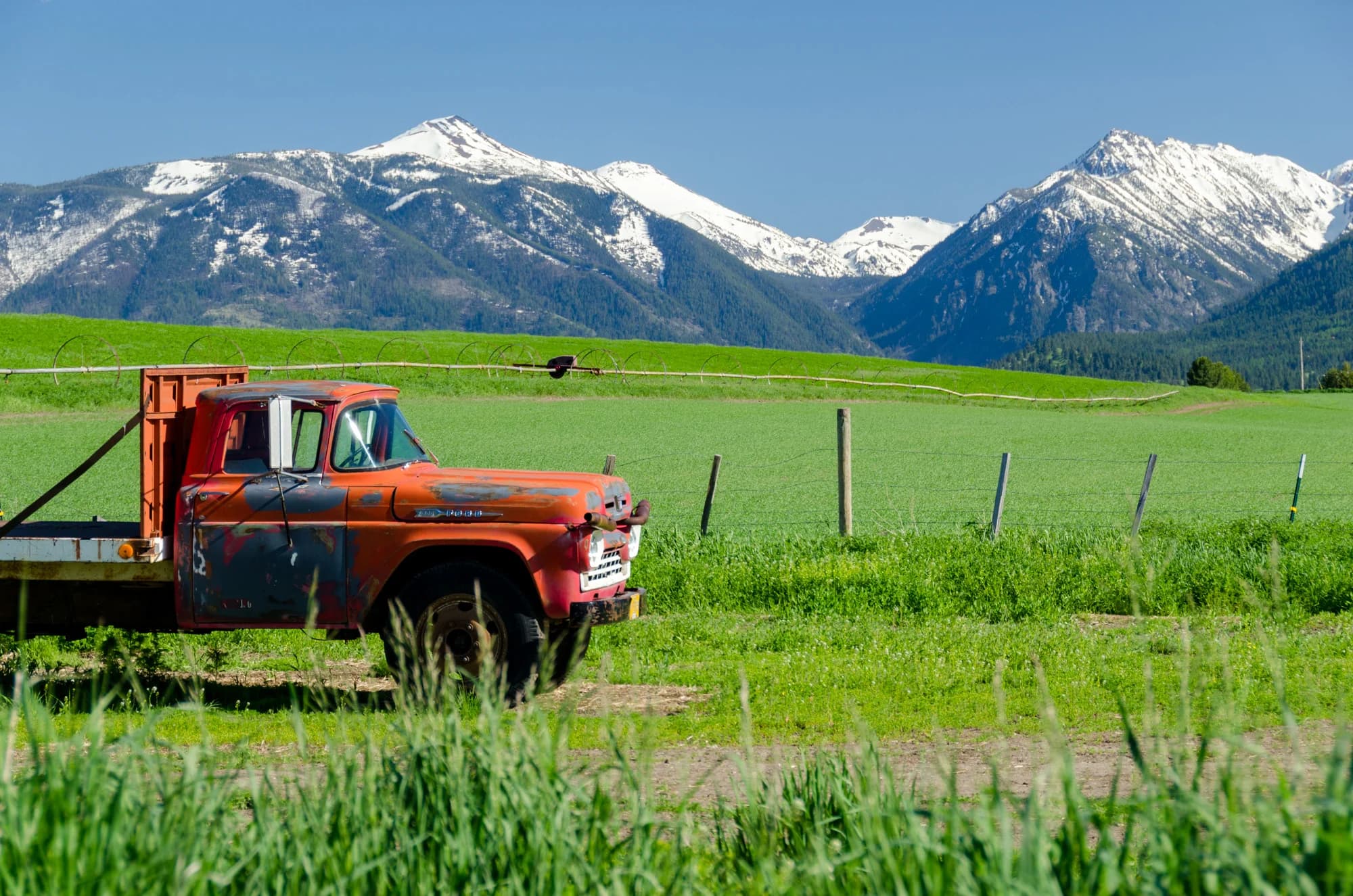
Working land near Enterprise. Landscape context; this photograph is not identified as 6 Ranch or Carman Ranch.
An atlas essay Wallowa Valley & Elgin · 2010–2012, with a 2026 source check

The long way home for Wallowa beef

A ranch needs a processor. A processor needs enough customers and skilled cutters. A restaurant needs cuts it can buy. Two Wallowa beef stories reveal how much of an agricultural economy happens after the animal leaves the pasture.

Read the story
An old truck in a field near Enterprise, with the Wallowa Mountains behind it.
Chapter 04 Work & livelihoods

Made here. A life built here.

One Joseph worker moved from the sawmill to bronze casting to public works. His path, an earlier sign painter’s commissions, and the county’s payroll figures reveal an economy more connected than its industry labels suggest.

Read the story
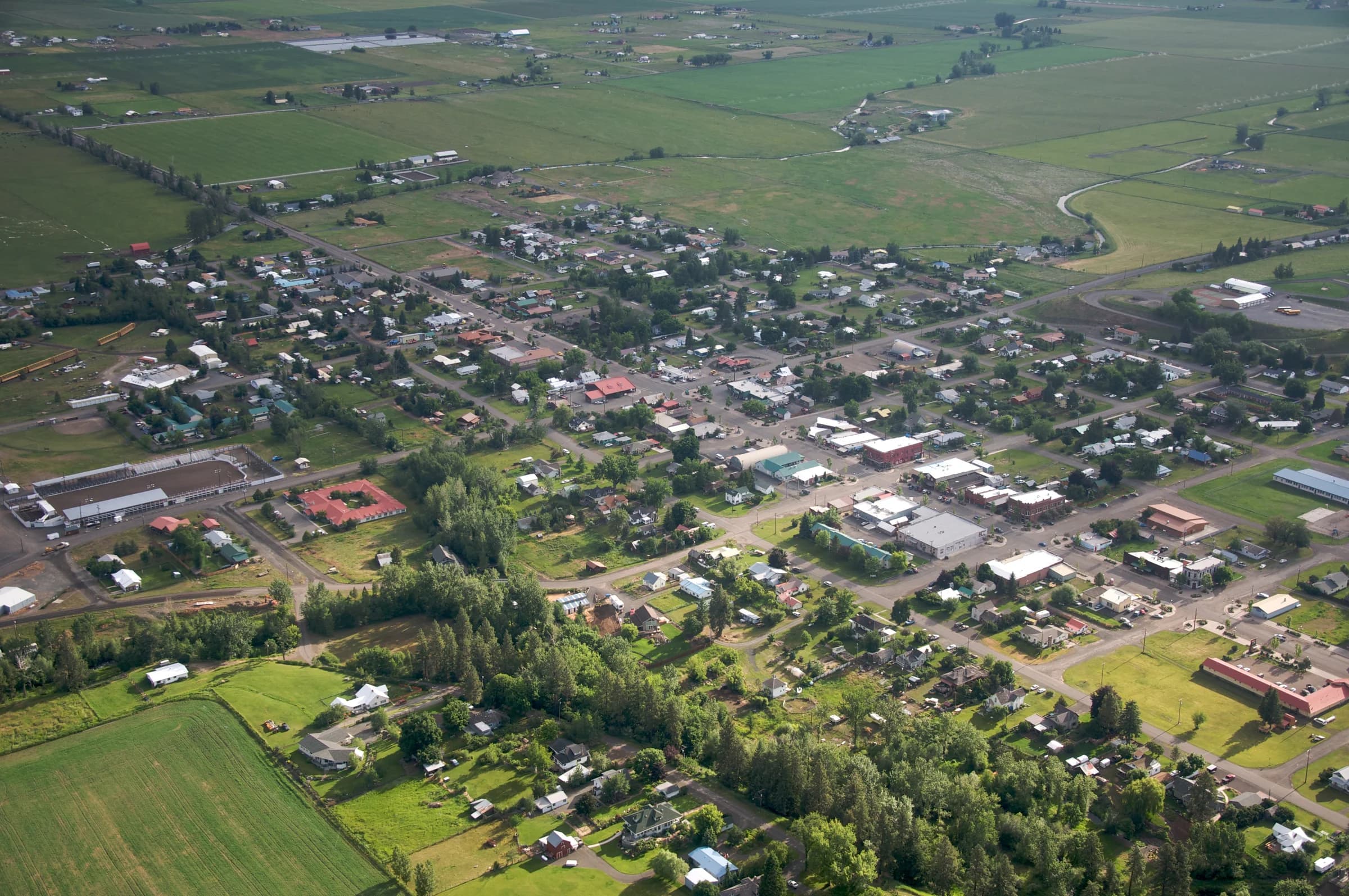
Joseph and surrounding fields. This modern landscape photograph does not identify the fields used in the historical lettuce experiment.
An atlas essay Beyond the familiar account

An economy of experiments

Lettuce fields, a horse-powered carousel, firewood shipped to Dallas, and a general store with its own radio: making a living here has meant trying new combinations of local skills and distant customers.

Read the story