An influenza-delayed theater, a bank with a hospital upstairs, and a pharmacy sharing a roof with a lodge: follow the rooms where the valley’s towns repeatedly remade their lives.
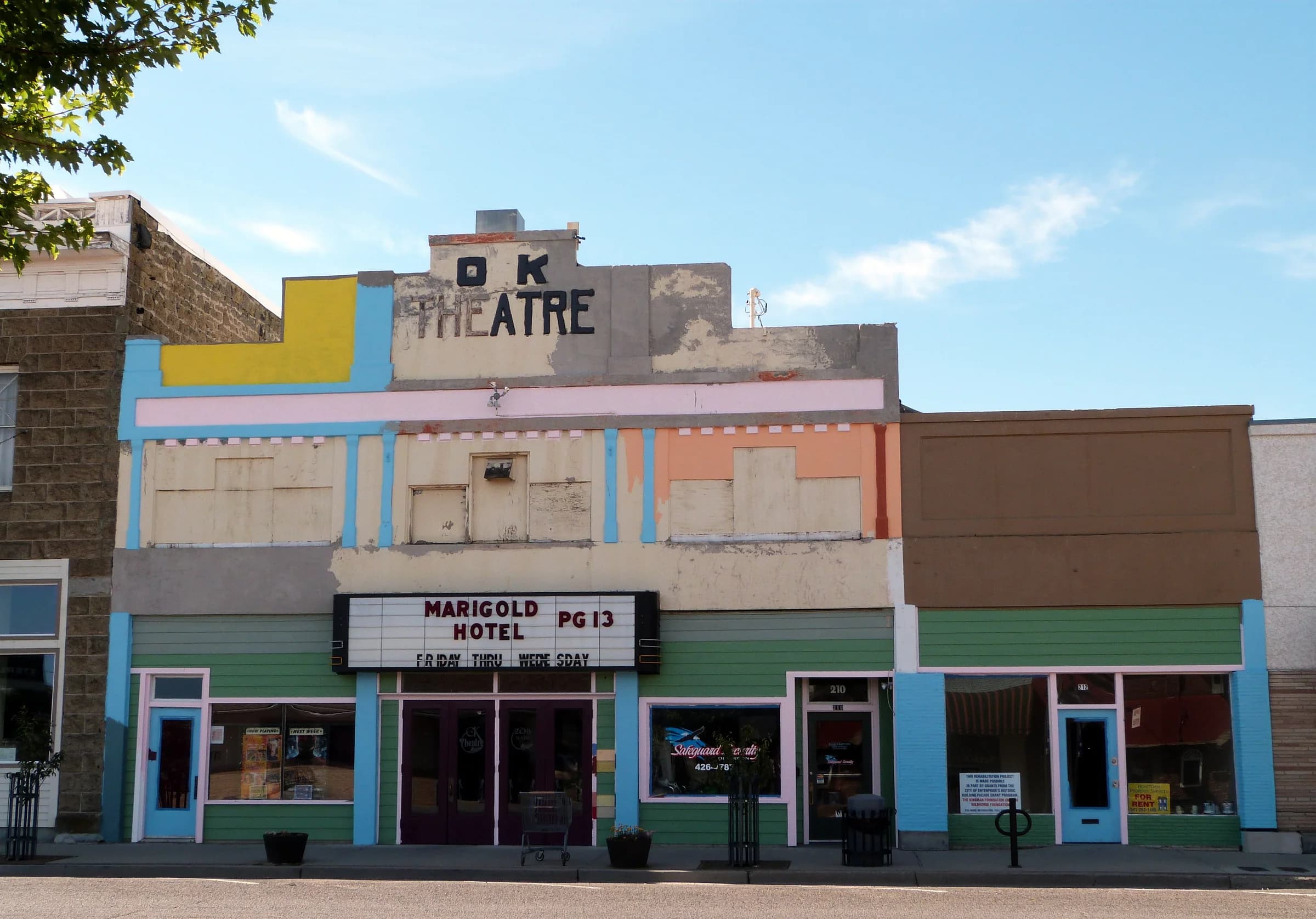
Enterprise’s OK Theatre was ready in December 1918, but its audience had to wait. Influenza restrictions had closed public gatherings. According to the city’s history, the theater finally opened on January 25, 1919, with instructions to leave alternate seats empty. Even in this small town, a new entertainment business began under the shadow of a worldwide public-health emergency.
The building project had already encountered wartime shortages. Builder John Oberg also worked on the Enterprise library. Those two buildings connect entertainment and public learning through the practical skills required to construct them, while the postponed opening connects a local business plan to events far beyond the valley.
A main street is often photographed as a finished row of facades. An opening date reveals something more unsettled: time and effort committed before anyone knows whether the doors can open on schedule.
The OK Theatre facade in Enterprise. The marquee records a moment in the past, not a current program. The building whose opening was delayed in 1918; this is a later photograph. Ian Poellet · 2012-08-05 · CC BY-SA 3.0 · Image & source ↗
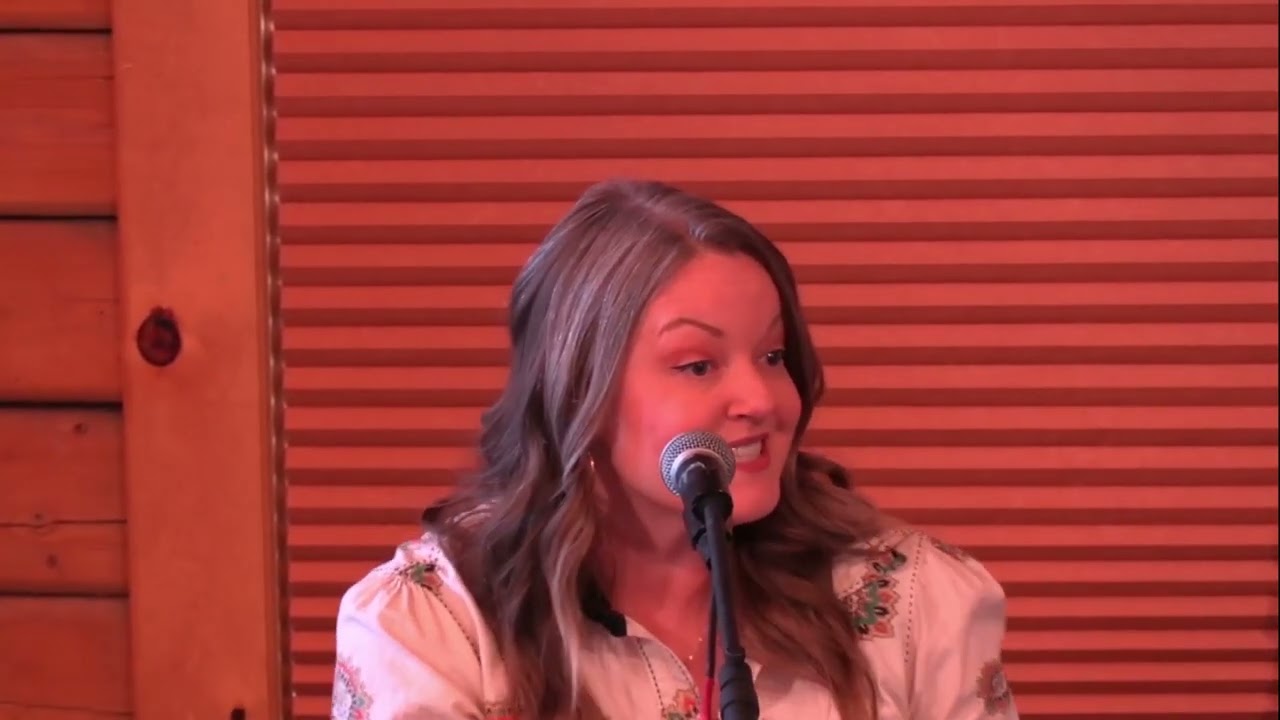
Bob Webb discusses preserving historical recordings and family stories, with Wallowa County elders’ recordings described in the Josephy Center’s program notes.
Joseph’s First Bank building dates to 1888. For roughly twenty-five years the bank occupied the front, with a newspaper office elsewhere downstairs. Upstairs, a meeting hall became a private school; the museum identifies a slate blackboard from around 1890 among the building’s surviving traces.
In 1913, Dr. Vedro Gregory leased the building for a private hospital. The county museum’s history describes an office and waiting room in front, a kitchen behind, and a ward and operating room upstairs, reached by a new interior staircase. In 1927 the city acquired the building. The Women’s Club leased the upper floor, adding a kitchen and stage for classes, dances and banquets; city hall and a library occupied space below.
The county museum opened in 1977, with much of its collection originating in assessor John Harley Horner’s collecting. A room that had served banking or medicine now held evidence of other lives. Following these changes floor by floor reveals something a facade cannot: keeping a building can mean repeatedly rebuilding its usefulness. The structure’s continuity depended on people finding new work for it.
Lostine’s pharmacy building gives an unusually clear example of how much could fit into one address. Oregon’s historic-site record dates the stone structure to 1900. It describes the pharmacy, an adjoining doctor’s office associated with Dr. Eberle Randolph Seeley, and the second-floor meeting space used by Lostine Masonic Lodge No. 123 from 1906 to 1962.
The record connects the building to changes in professional medicine and to the social role of a fraternal organization. A person looking only at the storefront would miss the upstairs institution. A business list organized around current occupants would miss both the earlier medical work and the meeting room’s history.
This is one reason Lostine deserves more than a brief stop between larger towns. Its built environment holds overlapping histories of care, commerce, and association. The historic nomination documents those earlier uses; it is not a statement about the services offered there today.
Marilyn Hulse’s account of local soda fountains adds a more everyday geography to those formal institutions. She describes pharmacy counters in Wallowa and Lostine and recalls Enterprise’s Homan Drug Store as a teenage gathering place in the 1950s and 1960s. Buying something and spending time with other people happened in the same room.
A counter can matter to a town for reasons that do not appear in its assessed value or business classification. The sale pays for the space; the repeated encounters give it another use. Hulse’s retrospective supplies examples of that social life, without proving that every resident experienced the same welcome.
Together, the theater, bank, lodge room, and fountain suggest a way to read the street: ask what happened inside, who could enter, and what changed when a room took on a different purpose. The buildings become evidence of a town continually making itself, rather than scenery left over from a completed past.
An available dwelling, an affordable monthly cost, and a workable journey to jobs and care are different parts of the same housing question. Start with an Enterprise building, then examine what the countywide figures can tell us.