Lettuce fields, a horse-powered carousel, firewood shipped to Dallas, and a general store with its own radio: making a living here has meant trying new combinations of local skills and distant customers.
Editorial synthesis · 6 minute read · 8 sources
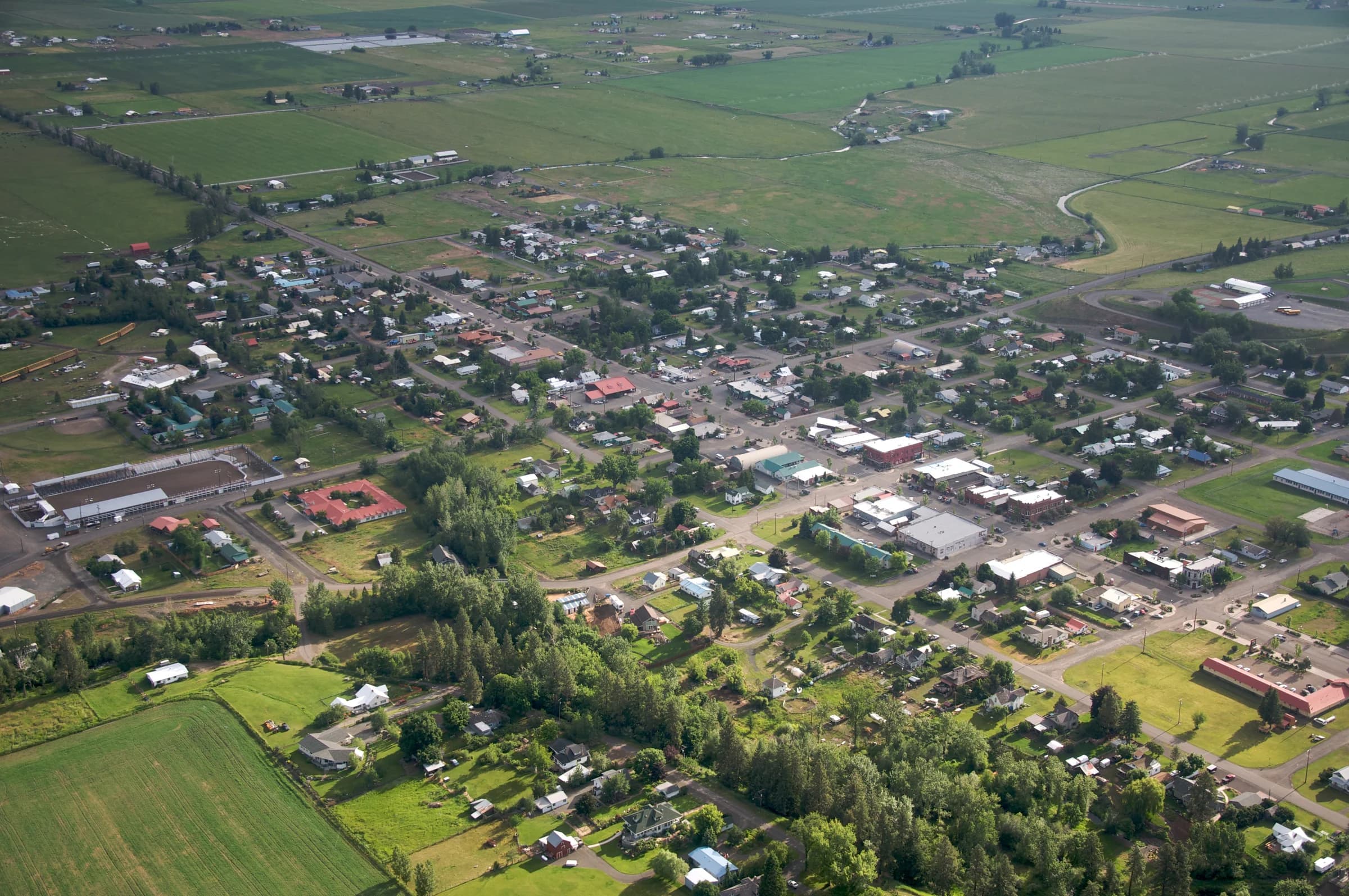
Joseph and surrounding fields. This modern landscape photograph does not identify the fields used in the historical lettuce experiment. Sam Beebe · 2007-07-08 · CC BY 2.0 · Image & source ↗
In this story 7 sections
When lettuce looked like the next big thing
In 1923, Wallowa County growers began an effort to build a commercial lettuce industry. Marilyn Hulse’s retrospective describes an organizing meeting in Enterprise and an information office in Joseph. The experiment also reached the lower valley, where Pastor Falwell grew lettuce to raise money for his church. High-school students helped weed and harvest.
These details make the effort more than an unusual crop in an old newspaper. It required coordination among growers, seasonal labor, information, and a way to reach buyers. The hoped-for industry entered school routines and congregational fundraising as well as farm accounts.
Hulse dates the effort through 1939 and attributes its failure to the climate. That is a historian’s retrospective explanation; the account does not supply a full series of yields, prices, or shipping losses. What it clearly establishes is a sustained attempt to create another livelihood, rather than an economy that simply inherited its present mix of work.
One smaller enterprise linked the Promise country to Wallowa Lake. In Marilyn Hulse’s account, Walter Carper built a horse-powered merry-go-round and assembled it at Cougar Pond, near the head of Bishop Creek. Promise residents gathered in the meadow for Fourth of July picnics, horse races and rides.
Carper then saw a way to earn money at the lake. He moved both the apparatus and the horses that powered it to the amusement park there. Hulse’s retrospective does not supply an exact year for the move; it points readers to the earlier county history and Stories of Wallowa Lake.
The small story changes the scale of tourism history. A visitor economy could draw on an invention first used for a local celebration. The ride moved because its maker saw another audience for the same work. To follow that experiment, the atlas has to connect a northern gathering meadow with the more familiar destination at the lake.
The county’s 2021 Economic Opportunity Analysis describes Wallowa County at the beginning of long distribution chains for its resources and at the far end of supply chains for goods it needs. That geography gives an older crop experiment a contemporary resonance.
Growing something and making a living from it are different accomplishments. A product has to reach a buyer in a usable condition at a price that covers the work and transport. A county can possess land, skills, and initiative while still facing a difficult route to market.
This is an interpretation connecting two sources, not evidence that transport caused the lettuce effort to fail. It does help explain why local economic experiments deserve to be studied through their whole operation: inputs, labor, processing, distribution, and customers.
At an October 2014 small-diameter timber summit in Burns, Wallowa Resources’ Nils Christoffersen described another effort to connect a resource with a market. The meeting summary recounts the organization’s investment through Community Solutions Inc. in Joseph Timber, followed by a setback when a majority owner liquidated the rest of the mill.
By the time of his presentation, bundled firewood was the operation’s largest product line, reaching Seattle, Salt Lake City and Dallas. He also described contractors moving into riparian restoration, fuel reduction, weed control and aspen restoration. Experience on those projects helped them build a record for obtaining further work.
These are the presenter’s 2014 observations, but they make the experiment unusually tangible. The problem involved products, equipment, buyers, financing and the ability of local crews to win contracts. Restoration could generate work and usable material; turning either into a continuing livelihood still required an organization capable of bringing the pieces together.
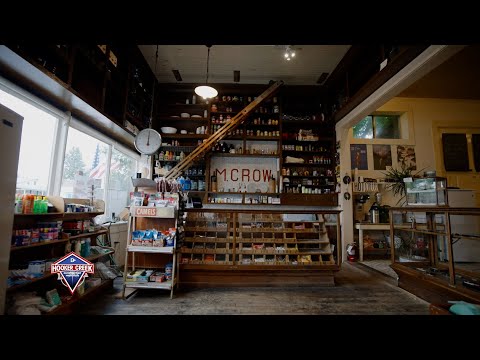
Travel Oregon’s profile dates M. Crow in Lostine to 1907 and describes its long operation by the Crow family. In 2013, designer and artist Tyler Hays, who grew up in Joseph, bought the business as the family prepared to leave it. The profile describes a combination of general store, brewery, meeting place, products, and radio.
The continuity is real, but so is the change. Keeping a recognizable place open can require a different mix of activities and customers from the one that sustained it before. A building can preserve a familiar name while the business inside reorganizes how it earns money.
The published profile and the film linked here provide a view of that transition. They do not establish profitability, staffing over time, or whether every longtime customer experienced the change in the same way. Those are different questions from whether a store survived.
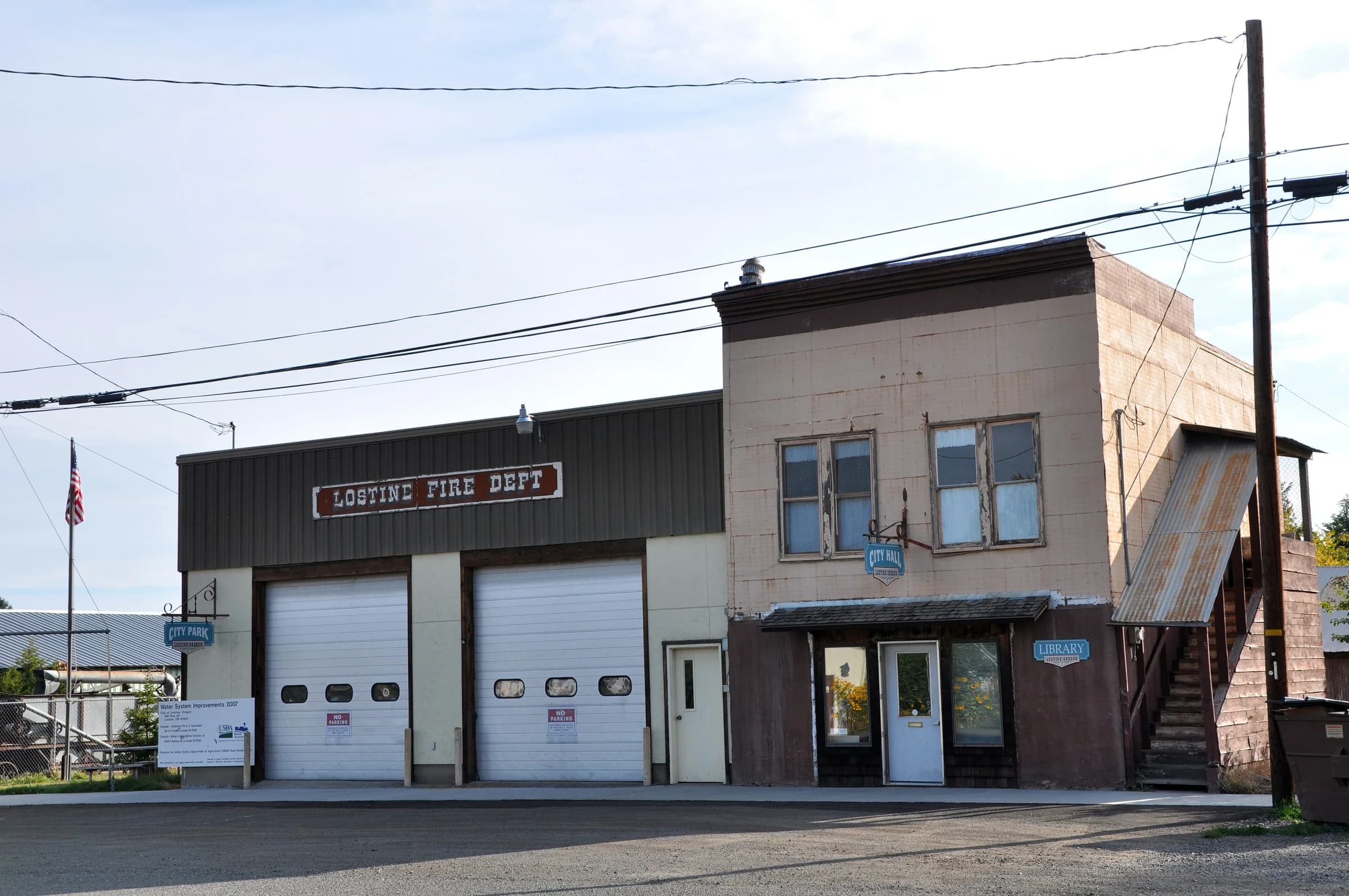
Civic buildings in Lostine, photographed from the street. Lostine street context; this photograph does not show M. Crow. Finetooth · 2010-09-18 · CC BY-SA 3.0 · Image & source ↗
In his 2026 review of the Findley family history, Rich Wandschneider describes journeys to trade butter and obtain supplies, repeated moves, and Sarah Findley’s part in deciding where the family would live. The account is the reviewer’s reading of the family record; the original book remains a separate source to examine.
It brings household production and decision-making into the economic landscape. Work did not begin and end at a registered business. Preparing something to trade, managing supplies, and deciding whether another move was possible were part of making a livelihood.
That perspective changes which stories deserve attention. The successful enterprise leaves a name and perhaps a building. The work that kept a household going may survive in letters or someone else’s recollection, even when it was essential to the enterprise’s survival.
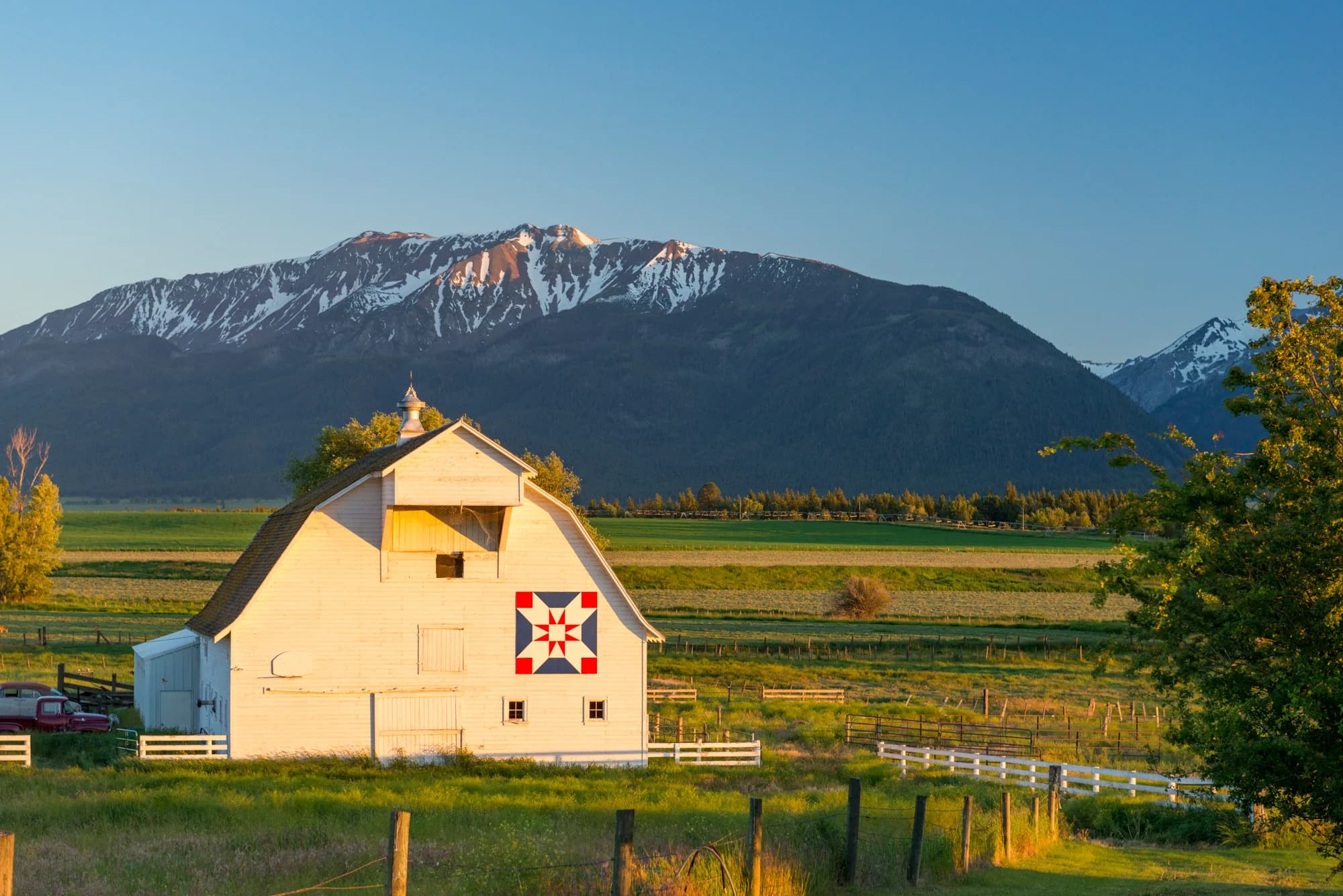
A barn on Wallowa Lake Highway 82 near Enterprise. A regional working-land image; no association with the Findley family is established. Gary Halvorson, Oregon State Archives · 20 June 2016 · CC BY 4.0 · Image & source ↗
The Wallowa Story, a narrated slide presentation made for the 1987 county centennial and later restored, offers a period account of the region. It is valuable both for the material it preserves and for the choices its makers made about what constituted the county’s story.
Set a centennial account beside the lettuce effort, the changing store, and a family history, and a more unsettled economy comes into view. People tried things, adjusted them, moved, stopped, and began again. The businesses that remain visible are the surviving portion of that process.
The lesson is not that every new venture can succeed or that the county has one obvious next industry. It is that economic history should preserve attempts as carefully as successes. A failed crop can reveal constraints; a changed store can reveal adaptation; a household record can reveal the labor that neither a directory nor a celebratory history counts.
Wallowa History Center · Marilyn Hulse · Accessed 2026-09-13
February 2023. Retrospective citing the original Wallowa County History, page 90, and Stories of Wallowa Lake. No precise construction or relocation date supplied; original volumes remain research leads.
2021. Printed pages 25–28: vision, housing and economic goals. The analysis discusses entrepreneurship, working lands and housing alongside modest growth. Its proposals include rural housing opportunities as well as support for communities; it should not be read as agreement on one housing strategy.
High Desert Partnership · Dr. Brenda Smith · Accessed 2026-09-13
Summit October 8–9, 2014, Burns, Oregon; page 8, Collaborative Operating Model for Underutilized Wood, Nils Christoffersen. A contemporaneous summary of the presenter’s account, not an audited financial statement. Market destinations and product mix are historical.
Profile dates establishment to 1907 and ownership transition to 2013. Dirty Freehub’s description instead says 1906; founding date needs original business records.
Production is one part of an economy. Processing, transport, sales, ownership, and skills determine how work becomes an income. Follow the beef story into questions that apply across the county’s industries.