What turns emergency help into recovery?

A storm can happen in minutes. Applications, repairs, and the return of ordinary routines run on different clocks. Wallowa’s 2022 hailstorm makes those connections visible.

Wallowa city hall and fire station in 2013. The photograph predates the 2022 storm and does not show its aftermath.
Wallowa city hall and fire station in 2013. The photograph predates the 2022 storm and does not show its aftermath. Ian Poellet · 2013-09-10 · CC BY-SA 3.0 · Image & source ↗
In this guide 4 explanations and a comparison
Atlas analysis

Start with the task a household needs completed

Emergency response, temporary protection, and permanent repair have different purposes. A tarp can reduce immediate exposure without replacing a roof. Help with a windshield can restore access to work without repairing a home. A useful account follows these tasks separately and then explains how they connect.

The hailstorm reporting identifies examples of materials arriving, small grants being offered, a larger appropriation being approved, and contractors being sought. These are successive capacities, not interchangeable measures of success. An organization can be effective at one stage while residents still face a barrier at the next.

Evidence & definitions1. Eastern Oregon town damaged by hail storm recovers together2. Neighbors Gather Together After Extreme Hailstorm in Wallowa3. State sends millions to Eastern Oregon to deal with storm damage, pollution
Documented history

Money and capacity have different units

The Emergency Board approved $2 million for Wallowa in September 2022. OPB’s account also records a shortage of window and siding contractors. Those two facts belong together: a dollar amount describes spending authority, while a contractor shortage describes the ability to turn purchasing power into completed work.

The initial Lostine church microgrant cap of $500 served a different purpose from the larger allocation. It was advertised for immediate expenses such as deductibles and glass repair. Combining the two figures into one total would conceal differences in eligibility, timing, and intended use—and would still not tell us how much was ultimately spent.

A closer look

Follow the work, not just the award

  1. Reach

    Can a household discover help and explain its needs?

  2. Resource

    Are the expense, eligibility, and available funds aligned?

  3. Repair

    Can materials and skilled workers reach the property?

  4. Confirm

    What work finished, and what needs remain?

Analytical sequence derived from the published response. Tasks can overlap; this is not an official application process.
Evidence & definitions3. State sends millions to Eastern Oregon to deal with storm damage, pollution2. Neighbors Gather Together After Extreme Hailstorm in Wallowa
Atlas analysis

Local relationships can help; reach still needs evidence

Named churches, businesses, and local offices appear in the recovery accounts. Their involvement shows how organizations already present in the county could supply materials, applications, and coordination.

A fair evaluation would compare documented needs with assistance received, while protecting individual households’ identifying details. Uninsured losses, transport constraints, and difficulty completing paperwork are possible reasons to examine differences in access. They should not be assigned to particular people without evidence.

Evidence note. The August 2022 appeal as reproduced by Rural Organizing Project and Gary Hulse’s August 25, 2022 radio interview, which name the churches, businesses and local offices. They do not establish that every household knew where to turn or received comparable assistance.

Evidence & definitions2. Neighbors Gather Together After Extreme Hailstorm in Wallowa1. Eastern Oregon town damaged by hail storm recovers together
Project record

Case closure is not a universal finish line

The Oregon-Idaho Conference’s February 2026 retrospective records 30 cases closed within its Wallowa solidarity-grant entry. It does not define that figure as 30 fully rebuilt homes. Programs may count households, cases, visits, payments, or projects; their totals cannot be combined until those definitions and overlaps are understood.

The available record supports an account of organized response and continuing assistance. Keeping the limits of that record visible respects both the work that was done and the experiences still absent from it.

Evidence note. The Oregon-Idaho Conference’s February 18, 2026 retrospective, whose Wallowa entry counts cases served and closed between October 2022 and April 2023. It does not establish a countywide completion date or the final distribution of losses.

Evidence & definitions4. Honor UMCOR Sunday & OR-ID Disaster Response on March 15
Atlas analysis · comparison framework

Compare approaches

What each approach tries to do—and what would need to be known
ApproachPurposeEvidence to examine
Immediate small grantsMeet a defined urgent expense quickly.Who could apply, how long did payment take, and which expenses remained uncovered?
Larger public allocationsFund work beyond the scale of an initial emergency payment.What was disbursed, which repairs were completed, and how were estimates revised?
Case managementHelp households navigate needs, programs, and follow-through.How were cases defined and closed, and was unresolved need recorded?
Evidence & definitions2. Neighbors Gather Together After Extreme Hailstorm in Wallowa3. State sends millions to Eastern Oregon to deal with storm damage, pollution4. Honor UMCOR Sunday & OR-ID Disaster Response on March 15
Open questions

What would change the picture?

  • What do final expenditure and repair-completion records show?
  • Which households appear in more than one program’s count?
  • What capacity could be available before another event, and what would it cost to maintain?
Follow the evidence

Sources & definitions

  1. Eastern Oregon town damaged by hail storm recovers together
    OPB Think Out Loud; Sage Van Wing; Dave Miller interviews Gary Hulse · Examined 2026-09-13

    Publication: 2022-08-25. Locator: Transcript: insurance discussion; question beginning What have you already seen; Hulse answer on vouchers and plywood. Computer-created, volunteer-edited transcript; Hulse’s estimates remain attributed. Audio duration 10:46; quotation timecodes not checked.

  2. Neighbors Gather Together After Extreme Hailstorm in Wallowa
    Rural Organizing Project; Kelli Bosak byline, Sidra/ROP sign-off · Examined 2026-09-13

    Publication: 2022-09-07. Locator: Opening update; reproduced appeal headed Hailstorm-Stricken Town of Wallowa Needs Help!, created August 14, 2022. Updated December 8, 2023. Fundraiser republication is not independent reporting. Damage/FEMA statements are organizer assertions, not an official eligibility determination.

  3. State sends millions to Eastern Oregon to deal with storm damage, pollution
    Antonio Sierra, OPB · Examined 2026-09-13

    Publication: 2022-09-29. Locator: Opening Wallowa section, before Nitrates and flooding. Distinguish approved funding from completed repairs. Hulse’s testimony overlaps his earlier interview; legislative decision reporting adds a different evidence function.

  4. Honor UMCOR Sunday & OR-ID Disaster Response on March 15
    Oregon-Idaho Conference, United Methodist Church · Examined 2026-09-13

    February 18, 2026. Locator: OR-ID Conference UMCOR response by the numbers, October 2022–April 2023 entry. Reports a $10,000 Wallowa grant, case manager serving 324 households, and 30 cases closed. Service counts are not a verified number of repaired homes; statewide totals are not Wallowa totals.

Back to the lives and places

The stories behind the questions.
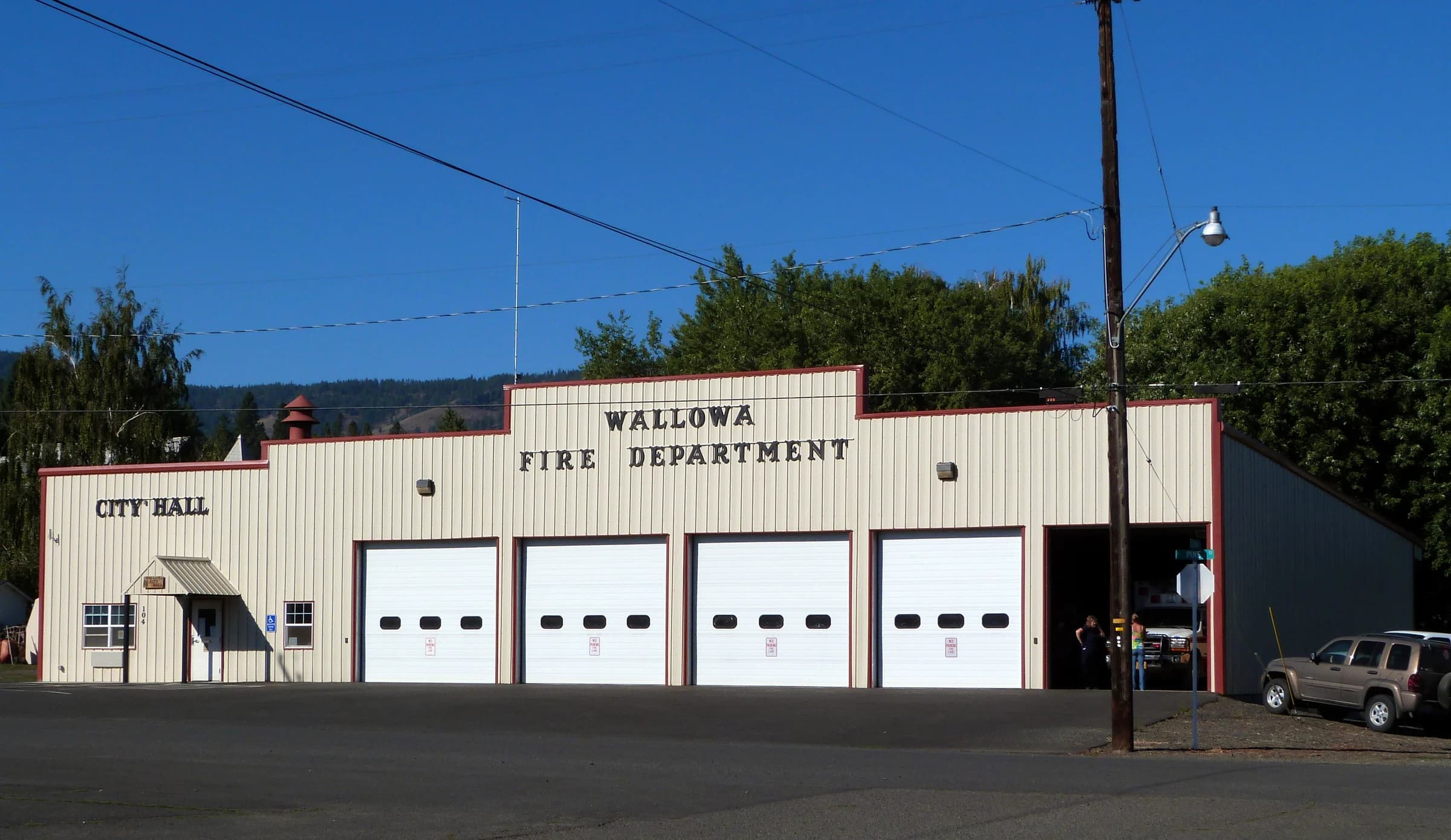
Wallowa’s combined city hall and fire station in September 2013, nine years before the hailstorm. This is a place photograph, not a damage or recovery photograph.
An atlas essay Wallowa · August 2022 and its aftermath

After the hail

Plywood arrived from Joseph. Small grants were organized in Lostine. Then Wallowa faced a different deadline: getting damaged homes repaired before winter, with money and skilled labor on different schedules.

Read the story
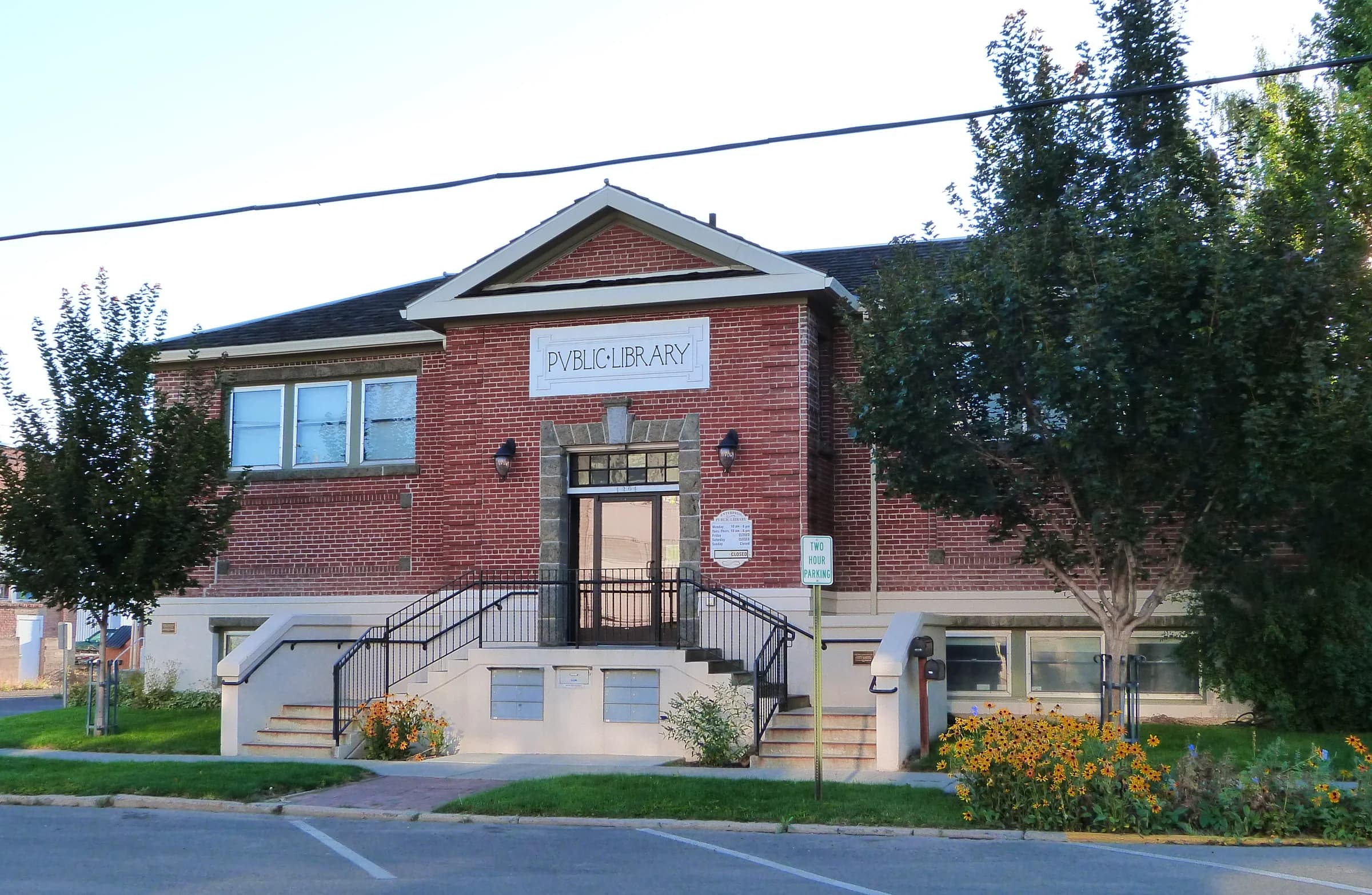
The Enterprise Public Library building.
Chapter 06 Everyday life

What makes a place a home.

A neighbor’s meal, a contested library vote, a job without an easy place to live: the ability to stay in Wallowa County depends on relationships and institutions that a landscape photograph cannot show.

Read the story
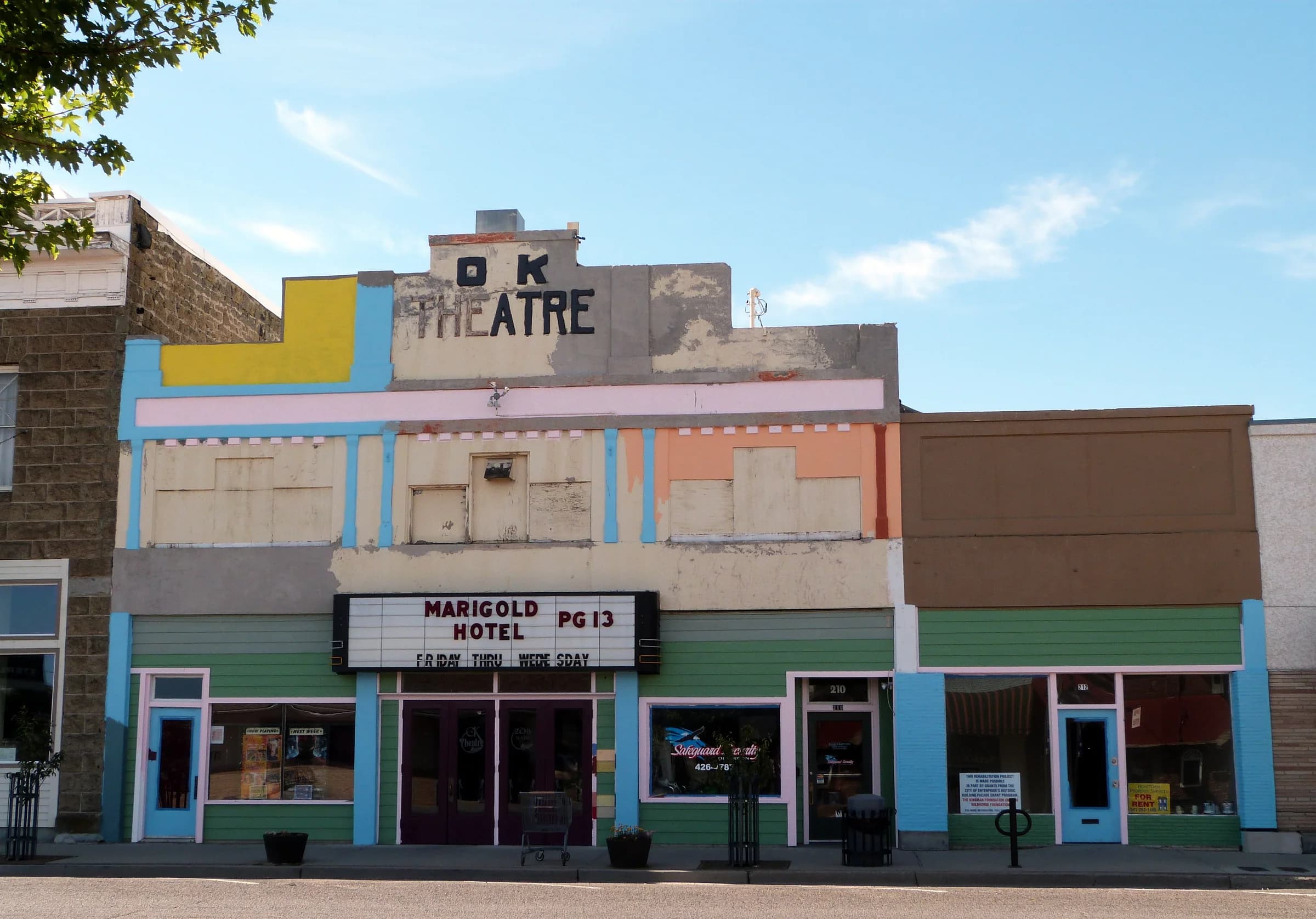
The OK Theatre facade in Enterprise. The marquee records a moment in the past, not a current program.
Chapter 05 Culture & gathering

The places we find each other.

Fishtrap began with a question about whose West was being represented. A library, a Grange hall and a few drawers of saved papers tell related stories about making room for the county to describe itself.

Read the story