A neighbor’s meal, a contested library vote, a job without an easy place to live: the ability to stay in Wallowa County depends on relationships and institutions that a landscape photograph cannot show.
In Maxville Heritage’s Hello Neighbor collection, Francis Buckles describes a husband’s stroke, care in Washington, and the couple’s eventual return home. Friends brought a meal; as Buckles remembers it, “that food was good for four days”. The account locates belonging in something practical: people noticing a need and helping with the next few days.
It is one person’s account, published by the project, not a measure of everyone’s access to support. Its significance is the kind of work it makes visible. A household’s ability to manage a crisis can depend on time, food, transport, and attention that never appear as a service business or a payroll job.
That kind of help cannot be assumed simply because a place is small. It depends on relationships, and people who have recently arrived, live farther out, or lack a strong network may experience a very different county.
The Oregon Voices county summary, issued in 2023 from a survey begun in 2021, records appreciation for the outdoors and for other people alongside concern about services, the economy, and community change. Six in ten respondents said they loved where they lived. Fifty-eight percent agreed that families were having trouble making ends meet.
Those statements are not contradictory. Attachment to a place can coexist with worry about whether a family can remain there. The second figure is a perception about families, not a finding that 58 percent of respondents’ own households were unable to meet expenses.
The summary combines 86 responses: 77 from a random-household invitation and nine from a subsequent engagement effort. It warns that the groups differ. Eight in ten respondents owned their homes, which describes this sample rather than the county’s homeownership rate. The report is a window into experiences; it is not a countywide vote.
The county’s 2021 Economic Opportunity Analysis treats housing as part of economic development. It identifies seasonal-worker housing as a constraint and links possibilities for professional work to internet access and workspace. These are planning findings from 2021, not a verified account of every condition today.
Their connection is direct: recruiting a worker is not enough if that person cannot find somewhere to live. A business expansion and a household’s housing problem can be two sides of the same regional question. A place can attract spending without making it equally easy for the people serving that economy to remain.
The analysis does not establish that any single housing policy would solve the problem. It does make it difficult to tell an economic story in which jobs, housing, and ordinary services occupy separate worlds.
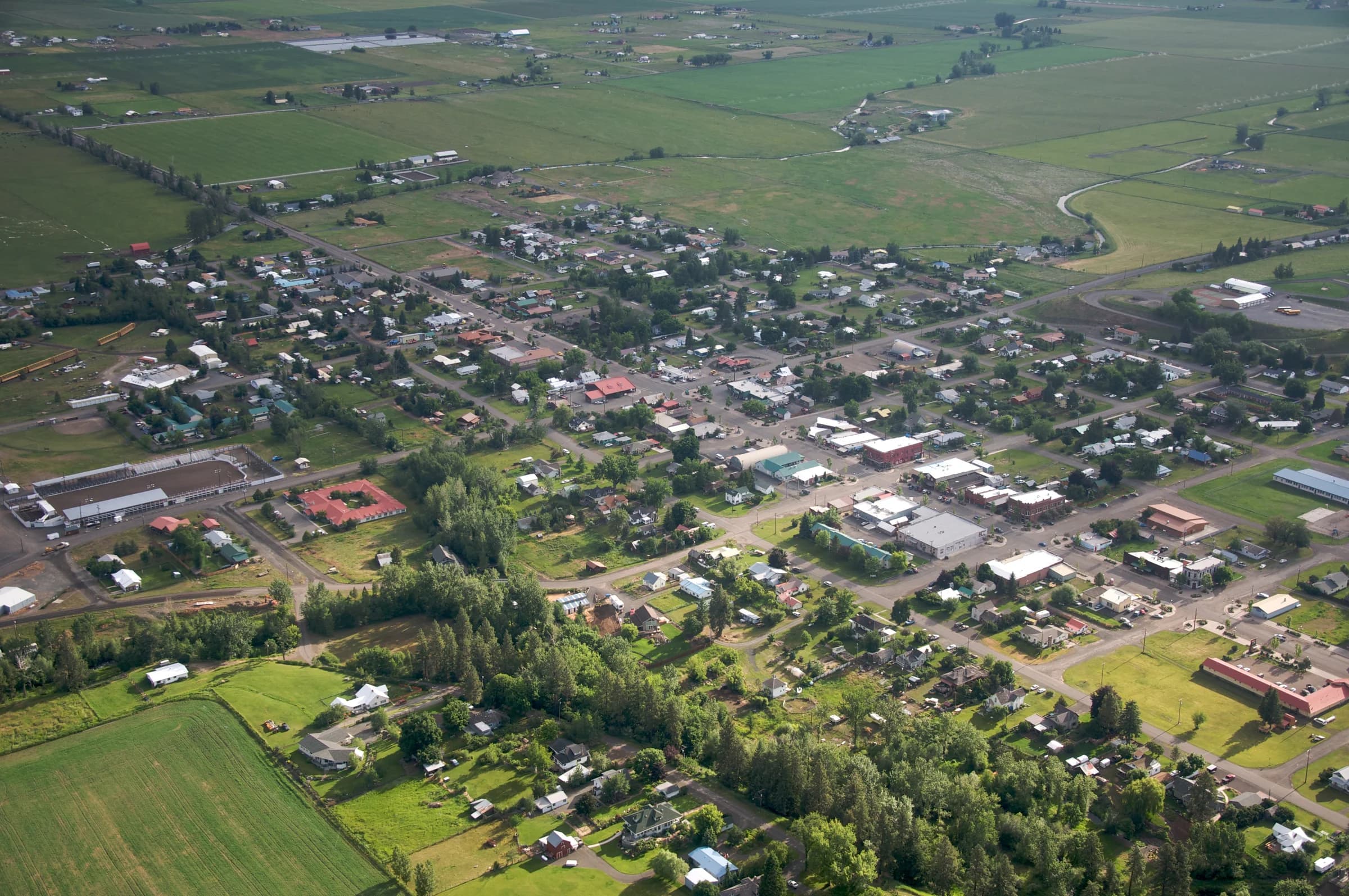
An aerial view of Joseph and the fields around its streets. The town’s physical setting, not a map of housing availability. Sam Beebe · 2007-07-08 · CC BY 2.0 · Image & source ↗
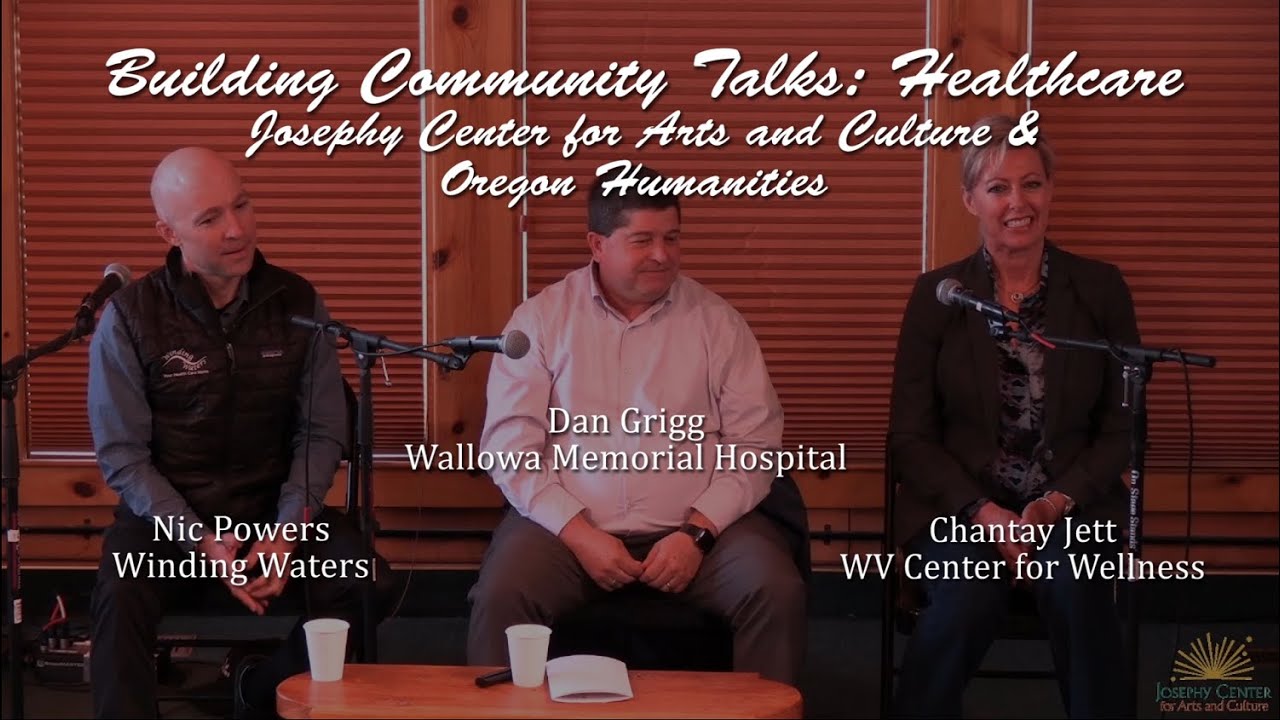
The Wallowa County Health Care District traces hospital service to 1950 and describes a clinic system with locations in Enterprise, Joseph, and Wallowa. That is a network of institutions, distinct from the informal care in Buckles’s account. Both belong in the story of how people manage everyday life.
Safe Harbors describes another form of support, addressing domestic and sexual violence through intervention and prevention. Its presence is a reminder that familiarity and neighborliness do not make every home safe. A useful portrait of a small community has to allow for experiences that contradict its most comfortable self-image.
An institution’s existence does not measure how easy it is for a particular person to use it. Travel, eligibility, cost, confidence, and privacy can matter. Provider websites remain the place to check current arrangements; resident accounts can reveal the experience of navigating them.
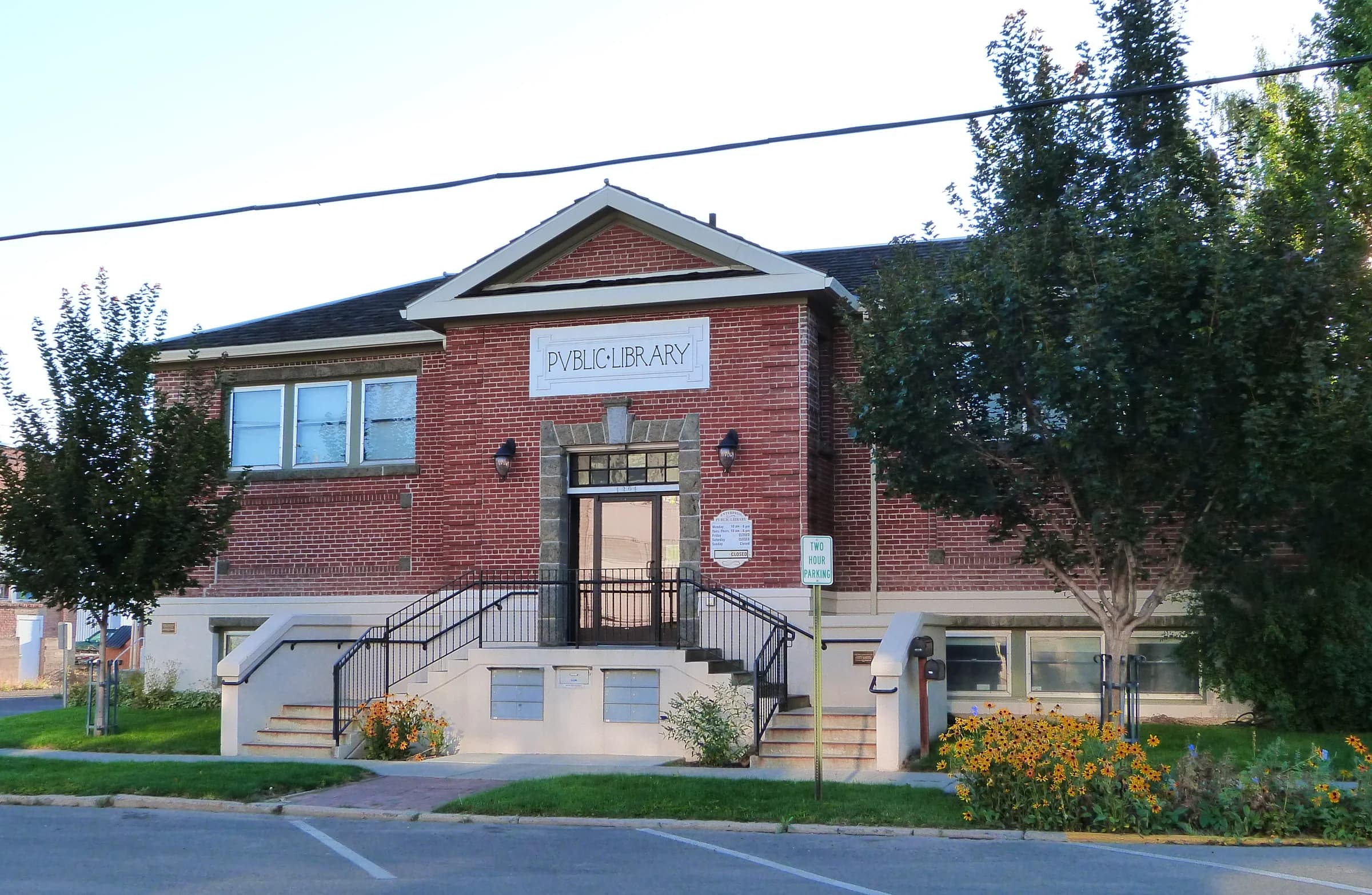
In May 2018, the county’s libraries became the subject of a direct argument over what residents would pay to sustain. The Chieftain reported that Measure 32-41, a proposed library district, lost by 1,979 votes to 1,102. Commissioners had announced the previous year that the county library would lose funding amid reduced federal revenue. District supporters sought a more durable funding structure; opponents objected to the proposed property-tax cost, particularly for farmers with large taxable holdings.
By August, the practical question had become where the collection would go. A follow-up report said literacy kits had already moved to Building Healthy Families. Enterprise’s librarian offered to house large-print books; librarians and the Imnaha and Troy schools sought access to select materials. Other placements and storage were still being discussed. The city libraries were separate institutions, and could not simply absorb everything the county library had held.
The vote was counted in ballots; its consequences arrived as decisions about books, storage, school access and readers’ needs. It is a concrete example of how a regional service depends on both public agreement and mundane capacity. A collection survives only if someone has room for it, can care for it, and can put it within reach.
Joseph Public Library lists resources including borrowing, computers, Wi-Fi, printing, and activities for children. Schools maintain another set of daily relationships between families and public institutions. These places belong in the county’s visual and economic story even when they are less likely to appear in a scenic photograph.
A library computer, a school day, a clinic appointment, and a neighbor’s meal answer different needs. Together they suggest a better test of a place’s vitality than its attractiveness alone: can people carry out the ordinary tasks that let them build a life?
The answer will differ for a renter, a parent, an older resident, a seasonal worker, or someone returning to an ancestral home. The county’s story becomes more useful when those differences remain visible, rather than disappearing inside a single claim about quality of life.
Survey began in 2021; summary issued in 2023. Pages 1–2: sample and themes; pages 3–7: responses. The summary combines 86 respondents: 77 from the random-household phase and 9 from an engagement phase. It records appreciation for landscape and neighbors alongside concerns about everyday services. These are respondents’ experiences, not a vote by the whole county.
2021. Printed pages 25–28: vision, housing and economic goals. The analysis discusses entrepreneurship, working lands and housing alongside modest growth. Its proposals include rural housing opportunities as well as support for communities; it should not be read as agreement on one housing strategy.
Wallowa County Chieftain · Paul Wahl; Historic Oregon Newspapers · Accessed 2026-09-13
May 23, 2018, page A1. Contemporary report of the May 15 vote on Measure 32-41, funding background and arguments on each side; not a current library-service directory.
Wallowa County Chieftain · Historic Oregon Newspapers · Accessed 2026-09-13
August 8, 2018, page A9, Books continuation. Distinguishes transferred literacy kits from proposed book placements and storage. Existing city libraries are distinct from the closing county library.
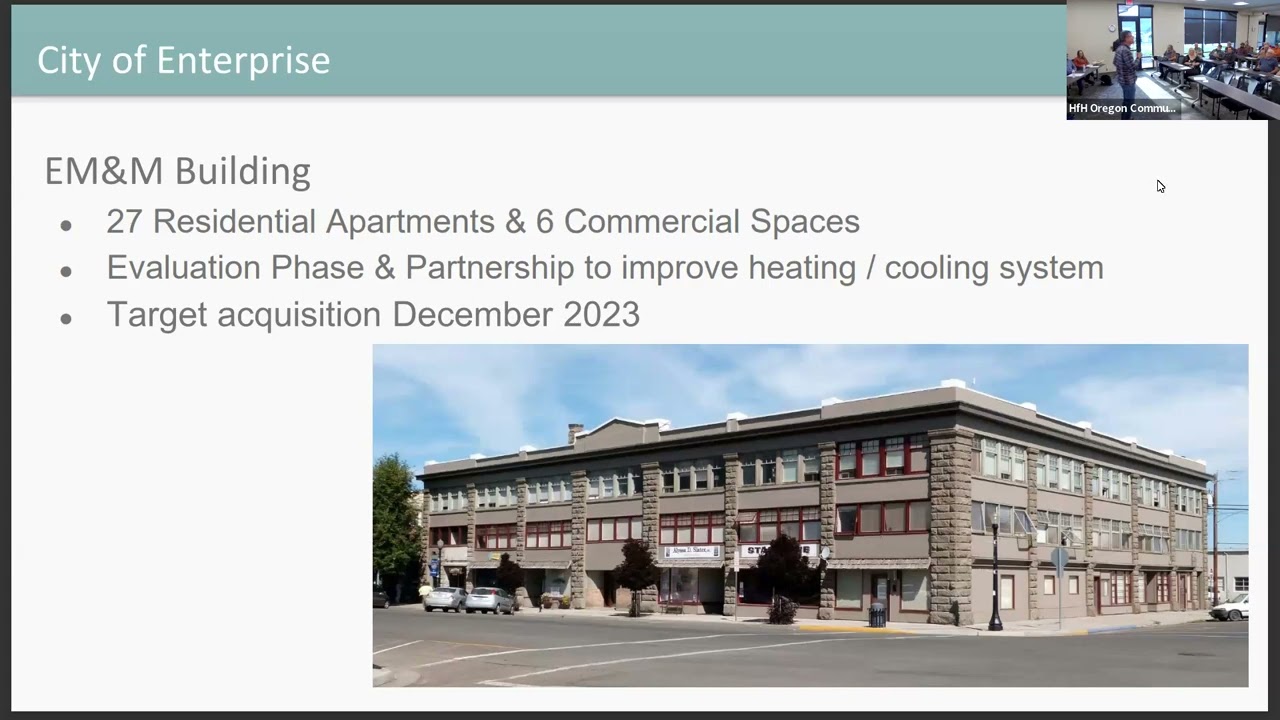
An available dwelling, an affordable monthly cost, and a workable journey to jobs and care are different parts of the same housing question. Start with an Enterprise building, then examine what the countywide figures can tell us.
A storm can happen in minutes. Applications, repairs, and the return of ordinary routines run on different clocks. Wallowa’s 2022 hailstorm makes those connections visible.