Fishtrap began with a question about whose West was being represented. A library, a Grange hall and a few drawers of saved papers tell related stories about making room for the county to describe itself.
Editorial synthesis · 4 minute read · 7 sources
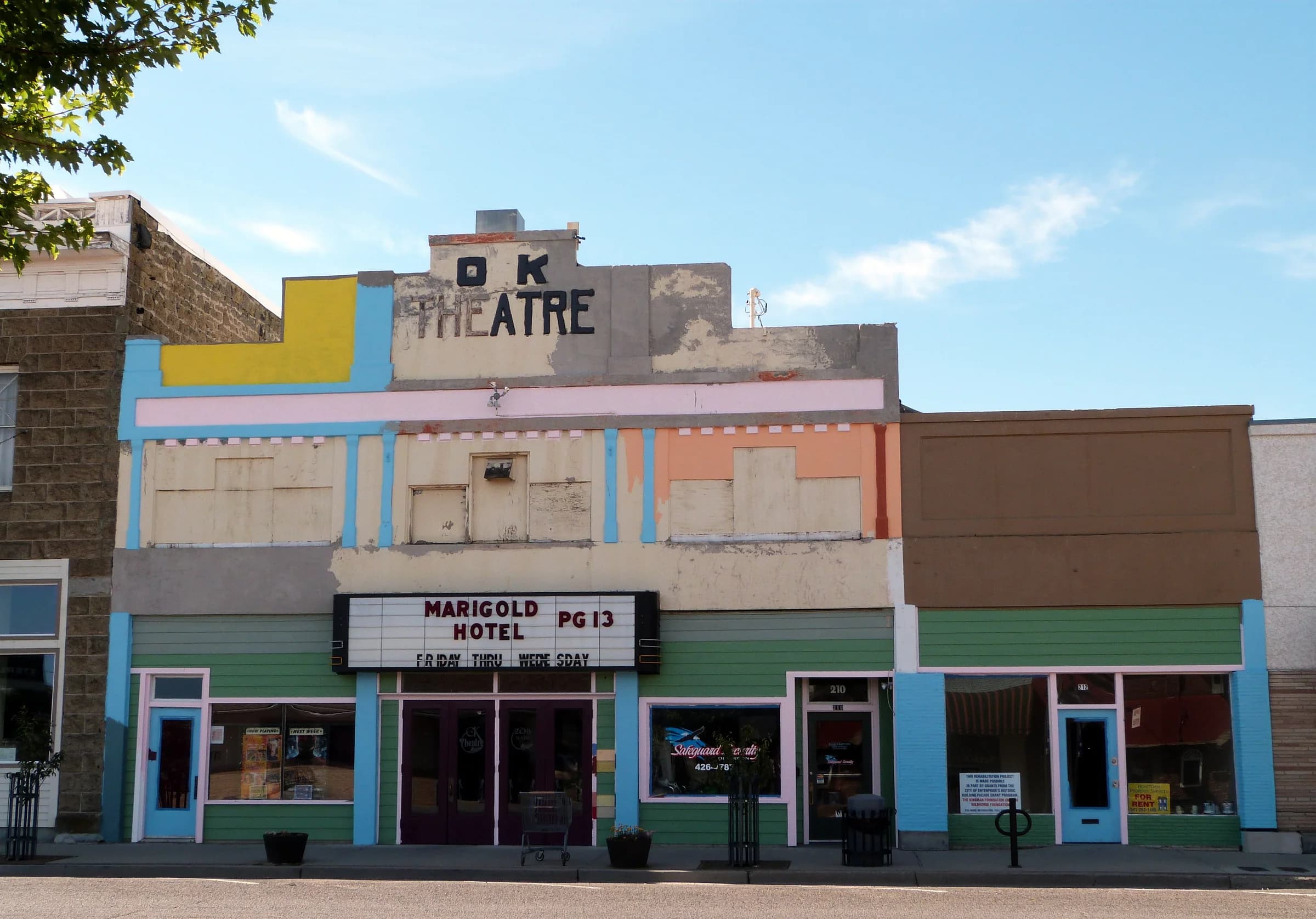
The OK Theatre facade in Enterprise. The marquee records a moment in the past, not a current program. Ian Poellet · 2012-08-05 · CC BY-SA 3.0 · Image & source ↗
In this story 5 sections
A library before it had a building
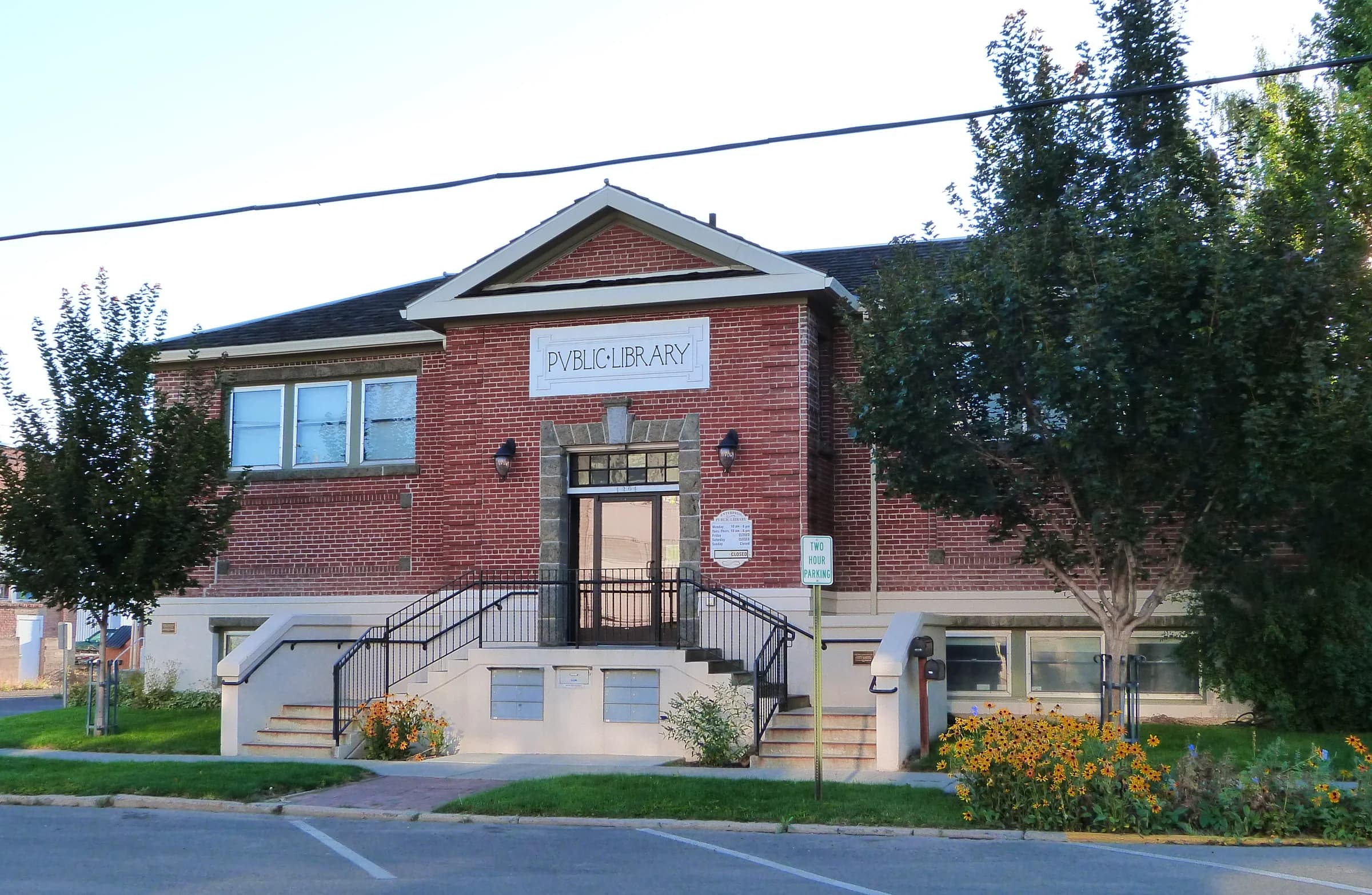
Enterprise’s library began in 1899 as a private association, with a subscription paid in money or a used book. It occupied borrowed quarters before the city took it over in 1910. Bertha Millard served as librarian from 1911 to 1959. A Carnegie grant and a city contribution helped produce the building completed in 1914.
Those dates describe two different kinds of continuity. A building supplies a durable place; a person supplies years of everyday attention. The second can be easier to overlook because it is less easily photographed. Yet the work of keeping an institution useful happens long after the opening ceremony.
The move from a subscription association to a municipal service also raises a question that runs through the county’s gathering places: what makes a shared resource available, and who carries the cost of keeping it that way?
The Enterprise Public Library building. A later photograph of the building discussed below. Ian Poellet · 2013-09-09 · CC BY-SA 3.0 · Image & source ↗
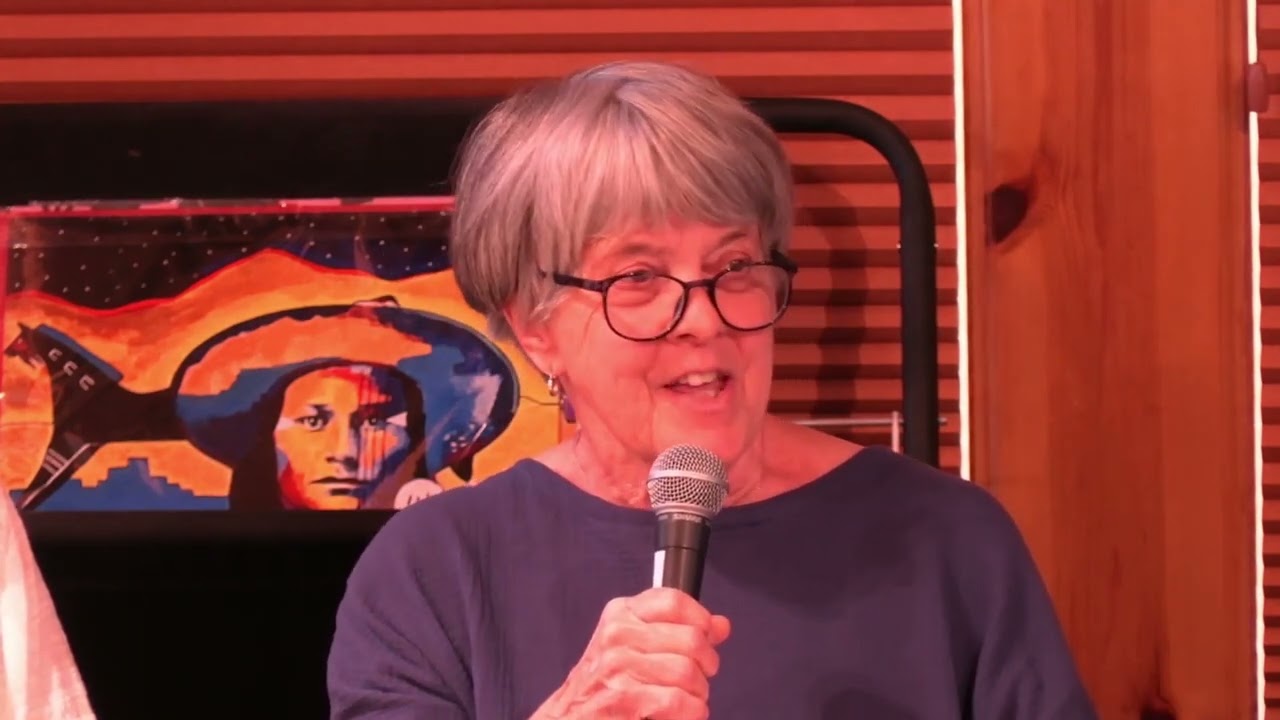
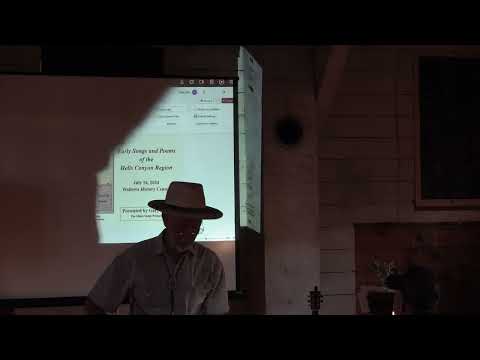
Bob Webb discusses preserving historical recordings and family stories, with Wallowa County elders’ recordings described in the Josephy Center’s program notes.
Southfork Grange in Lostine describes its work through agriculture, education, and service. Its public programs include gardening and composting activities and Brunch & Browse gatherings combining food and books. These are modest forms of organization, but they give a hall a use beyond its presence on a map.
A shared meal offers a reason to enter; a workshop gives people a task to do together. That is a different route into community from arriving at a meeting where everyone else already knows the procedure. The Grange’s program describes an invitation, not evidence that every resident takes it up.
Thinking about the hall this way brings the supporting work into focus: arranging a program, opening the doors, preparing the room, and giving people a reason to return. Community life depends on repeated occasions as well as prominent annual events.
Fishtrap began with a disagreement about representation. Its own history describes bookseller Rich Wandschneider attending a western writers’ conference in Portland in the mid-1980s and finding that the writers largely represented the Willamette Valley and Interstate 5 corridor. When he raised that concern with organizer Kim Stafford, Stafford suggested bringing the next gathering to Wallowa County.
In 1988, Wandschneider, Stafford and Alvin Josephy organized a gathering at Wallowa Lake under the theme “West Coast Writers and East Coast Publishers.” It became the beginning of Summer Fishtrap. The county was a place from which people could write and convene, with its own vantage point on what counted as western experience.
That origin sharpens the purpose of a writing gathering: the choice of location can change who enters a conversation and what they consider worth saying. The Josephy Center’s arts and learning programs offer another setting for making and interpreting work locally. A regional story becomes richer when residents have places to practice telling it, rather than appearing only as subjects in someone else’s account.
In a July 2012 essay, Rich Wandschneider described local organizations bringing University of Idaho archivists Garth Reese and Devin Becker to Wallowa County. Small contributions from cultural and community groups helped make the visits possible. Among the material he described were four file drawers of Grace Bartlett’s papers: correspondence, research notes, and work connecting local knowledge with other archives.
It is an instructive scale of cultural work. A few drawers and a funded visit can determine whether years of someone’s research become useful to others. Collection care, like a library desk or a Grange program, requires people willing to carry a task forward.
The essay also identifies cooperation among museums, the History Center, Maxville, Homeland, and the Josephy Library. Local memory was being made accessible through relationships among organizations, rather than by one institution collecting everything.
Marilyn Hulse’s historical account describes French Canadian Catholic settlement in the upper Prairie Creek area, German Catholic communities, and other migration patterns that brought different traditions into the valley. These are a historian’s descriptions of earlier communities, not a basis for assigning an affiliation to anyone living there now.
Tamkaliks has its own purposes and participation guidance, described by Nez Perce Wallowa Homeland. A tribal cultural gathering, a congregation, a library, and an arts workshop are not interchangeable versions of the same social space. What is appropriate to share, record, or participate in differs among them.
The common question is how a place sustains repeated human connection. Buildings help, but the histories here keep returning to people: a long-serving librarian, an organizer, a keeper of papers, a host. Their work makes the difference between a room that exists and a place someone can belong.
Organization’s undated retrospective: Rich Wandschneider, Kim Stafford and Alvin Josephy organized the first Wallowa Lake gathering in 1988. The conference theme is quoted as published.
A storm can happen in minutes. Applications, repairs, and the return of ordinary routines run on different clocks. Wallowa’s 2022 hailstorm makes those connections visible.