Atlas essay · Wallowa · August 2022 and its aftermath
After the hail
Plywood arrived from Joseph. Small grants were organized in Lostine. Then Wallowa faced a different deadline: getting damaged homes repaired before winter, with money and skilled labor on different schedules.
Editorial synthesis · 5 minute read · 4 sources
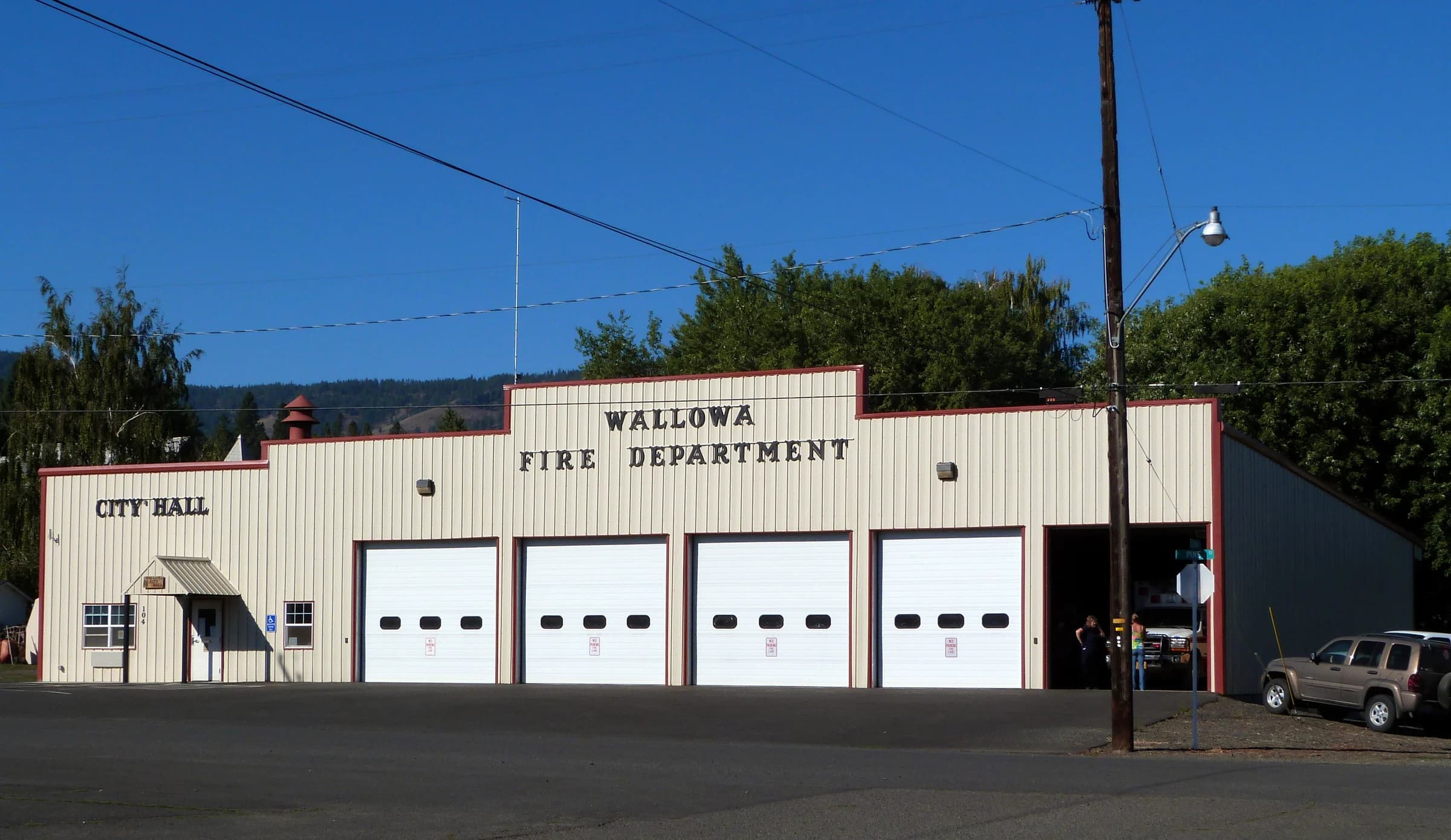
Wallowa’s combined city hall and fire station in September 2013, nine years before the hailstorm. This is a place photograph, not a damage or recovery photograph. Ian Poellet · 2013-09-10 · CC BY-SA 3.0 · Image & source ↗
In this story 5 sections
Reported experience
The first night was a materials problem
After the August 11, 2022 storm, a broken window was an immediate problem for a household trying to stay at home. In his August 25 conversation with OPB’s Dave Miller, Wallowa mayor Gary Hulse described 1917 Lumber in Joseph bringing plywood that first night. Names were taken down; the immediate purpose was to close the openings.
That detail matters because help did not begin with a completed damage assessment. Materials moved between towns while residents were still dealing with the consequences. Hulse’s interview offers a participant’s account of that response. His sweeping estimates of damage and insurance gaps should not be mistaken for an independently verified household inventory.
An application small enough to meet an immediate need
A fundraiser appeal dated August 14, reproduced by Rural Organizing Project, described a microgrant program administered through Lostine’s Presbyterian church. Applications initially had a $500 cap. Deductibles, plywood, and vehicle glass were among the uses described. The appeal directed people to Wallowa City Hall and the senior center for applications.
This was a particular design for assistance: a limited amount, concrete eligible needs, and local places to obtain a form. A relatively small payment could address an obstacle that a future reconstruction grant would not solve that day. The appeal is evidence of how the program was presented, not a final ledger of recipients or repairs.
The same appeal connected damaged vehicles with getting to work and services. That is an important dimension of the event: a household can have a roof and still lose its practical means of reaching a job or an appointment. Recovery involves several parts of ordinary life at once.
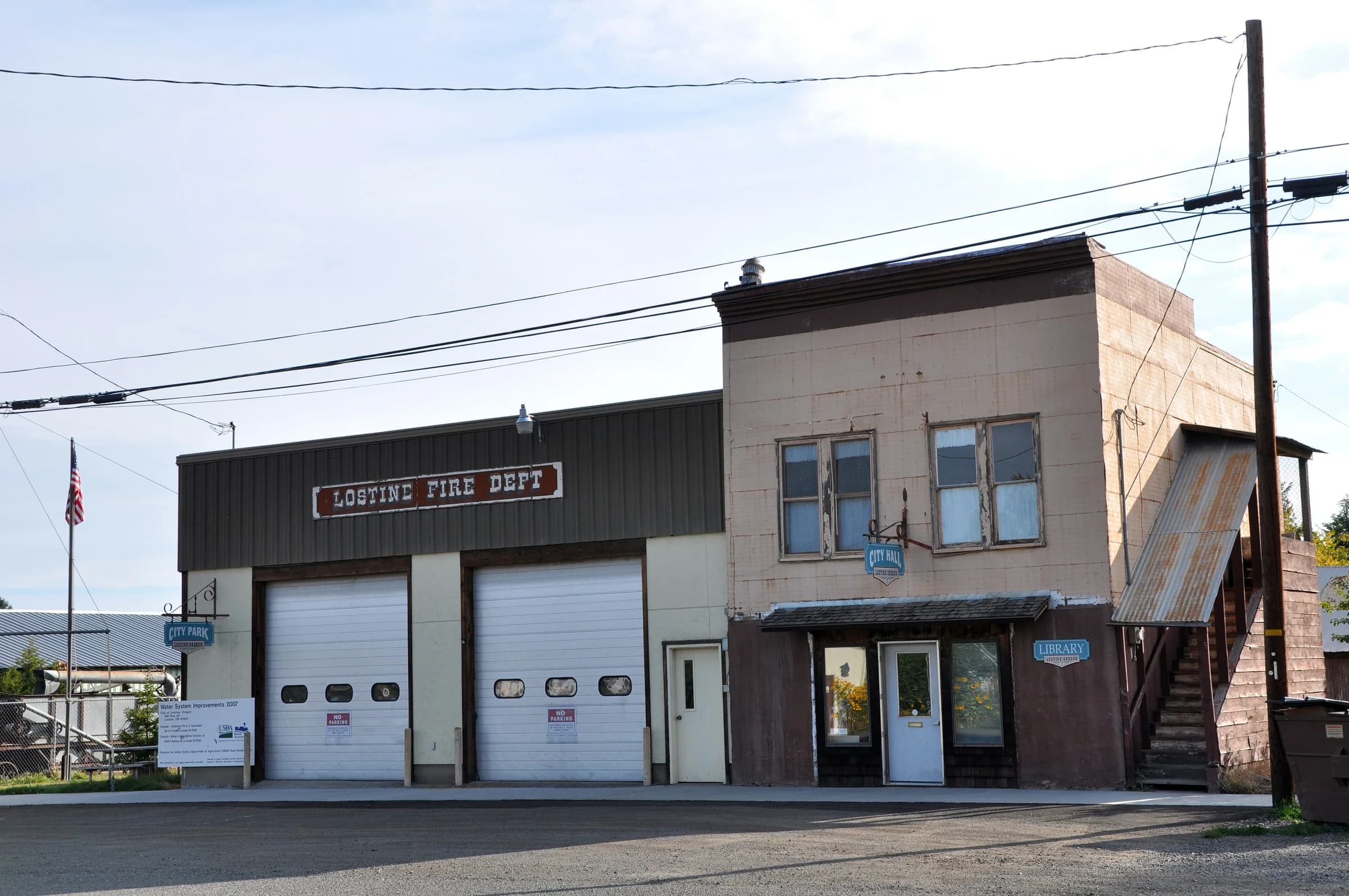
Civic buildings in Lostine. The photograph locates a neighboring community involved in relief; it does not depict the grant program or its recipients. Finetooth · 2010-09-18 · CC BY-SA 3.0 · Image & source ↗
By September, the argument had moved to Oregon’s Emergency Board. Antonio Sierra reported that legislative fiscal staff recommended initially providing half of a requested $2 million while waiting for fuller damage estimates. Senator Bill Hansell urged the board to provide the entire request before winter. The full board approved $2 million at its September 23 meeting.
The disagreement was consequential without requiring a villain. Better estimates could inform the allocation of public money. Waiting could also leave households relying on temporary protection in colder weather. The timing of the next board meeting made the administrative calendar part of the recovery problem.
After approval, Hulse identified a further difficulty: window and siding contractors were scarce. Funding expanded what could be purchased; it did not instantly produce the people available to install it.
A closer look
Different kinds of help, on different clocks
August 11, 2022
The storm; immediate boarding-up described by Hulse.
August 14 appeal
Lostine church microgrants advertised for immediate needs.
September 23
$2 million approved by the Emergency Board.
Before winter
Permanent repair depended on materials, scheduling, and contractors.
Dates and stages from the OPB interview, the reproduced appeal, and September funding reporting. This timeline does not establish when all repairs finished.
A February 2026 Oregon-Idaho Conference retrospective adds a later piece of the record. It describes a $10,000 solidarity grant for October 2022–April 2023 supporting a disaster case manager serving 324 Wallowa households and other initial needs. The entry reports 30 cases closed. Those are the organization’s service figures, with a defined grant period.
They are not a count of 324 homes reconstructed, nor proof that 30 households had every loss restored. The report includes larger grants and totals spanning multiple Oregon disasters; those amounts cannot all be assigned to Wallowa. Its value here is narrower: it documents an organized assistance effort continuing after the immediate emergency.
Read together, these records describe several jobs: identifying needs, reaching households, bridging immediate costs, assessing damage, finding funds, and arranging repairs. A delay at one step can matter even when another step is working well. This is a more useful explanation than treating recovery as a single sum of money or a single act of generosity.
The evidence supports the importance of both informal help and organized institutions. It does not establish which households were missed, whether assistance reached different groups equally, or the final cost of recovery. Answering those questions requires expenditure and completion records that can be compared across programs without counting the same household repeatedly.
For the reader, the scale becomes tangible: a pane of glass, an application, an available contractor, a colder month approaching. Each belongs to the same disaster, but each requires a different kind of response.
Publication: 2022-09-07. Locator: Opening update; reproduced appeal headed Hailstorm-Stricken Town of Wallowa Needs Help!, created August 14, 2022. Updated December 8, 2023. Fundraiser republication is not independent reporting. Damage/FEMA statements are organizer assertions, not an official eligibility determination.
Publication: 2022-09-29. Locator: Opening Wallowa section, before Nitrates and flooding. Distinguish approved funding from completed repairs. Hulse’s testimony overlaps his earlier interview; legislative decision reporting adds a different evidence function.
Oregon-Idaho Conference, United Methodist Church · Accessed 2026-09-13
February 18, 2026. Locator: OR-ID Conference UMCOR response by the numbers, October 2022–April 2023 entry. Reports a $10,000 Wallowa grant, case manager serving 324 households, and 30 cases closed. Service counts are not a verified number of repaired homes; statewide totals are not Wallowa totals.
A storm can happen in minutes. Applications, repairs, and the return of ordinary routines run on different clocks. Wallowa’s 2022 hailstorm makes those connections visible.