In 1935, Enterprise debated tearing the EM&M down. The county repaired it for housing. Nine decades later, keeping the building useful is again a question of roofs, wiring, money—and the homes inside.
Editorial synthesis · 5 minute read · 5 sources
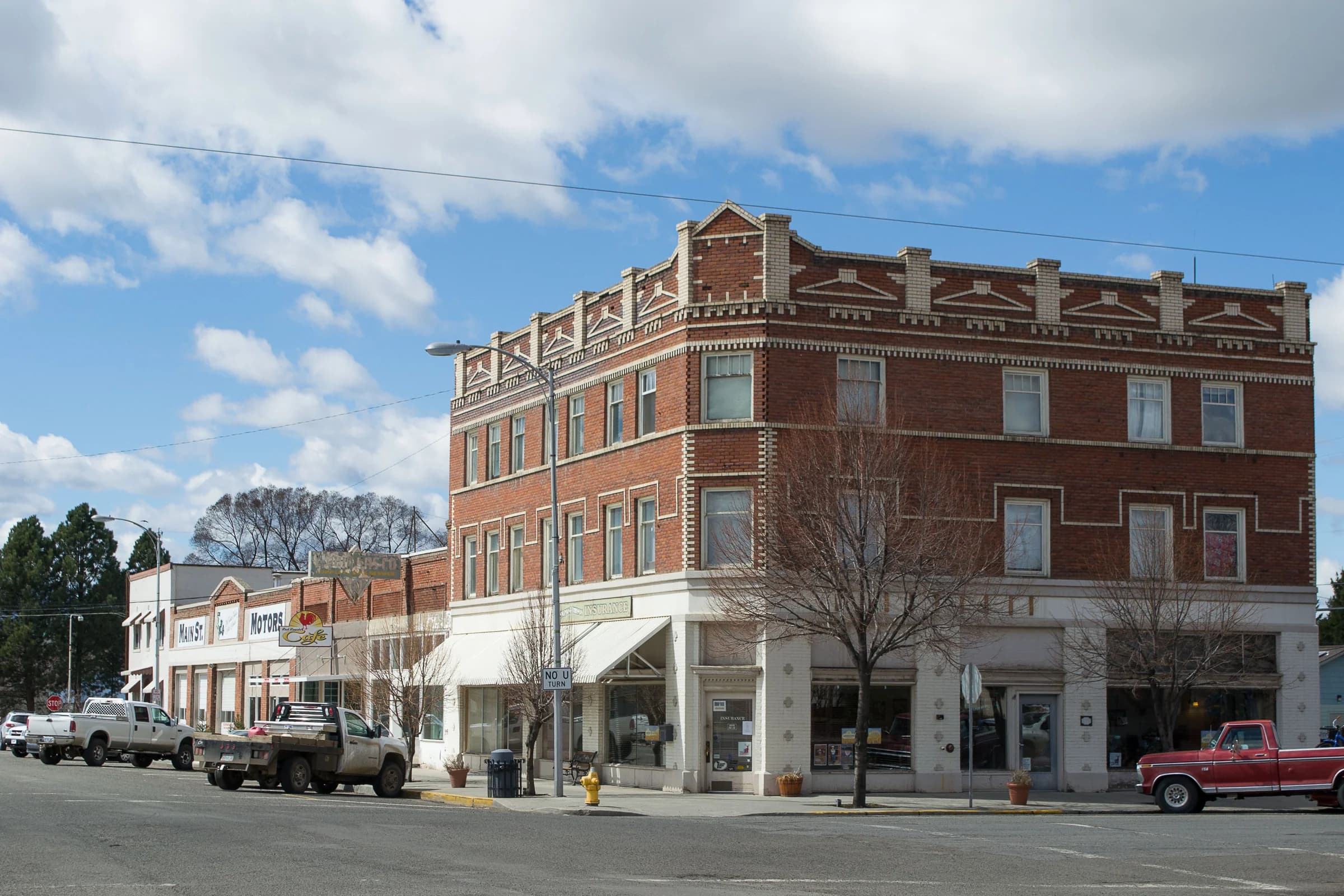
Enterprise’s downtown streetscape. Context photograph; the owner’s photographs of the EM&M itself are linked in the story. Visitor7 · 2013-04-09 · CC BY-SA 3.0 · Image & source ↗
In this story 5 sections
Documented history
A building the town nearly lost
The EM&M’s survival was not inevitable. Its National Register nomination reconstructs a 1935 argument about whether an expensive, deteriorating building deserved another chance. A newspaper editorial called for demolition; a Chamber of Commerce meeting divided over its future. The nomination describes Wallowa County choosing rehabilitation and housing instead.
Work began with the roof. County funds and State Emergency Relief Administration labor helped make the building usable. Four apartments had been added to the mezzanine by September 1936. These details come from the nomination’s reading of contemporary newspapers and commissioner minutes, rather than a new examination of each original record.
The present building therefore carries the results of an earlier choice about public spending and everyday shelter. Its familiar exterior is also a record of disagreement: people could recognize the same structure and reach opposing conclusions about what to do with it.
Working Homes says it acquired the EM&M in July 2024. Its project page describes 27 apartments and six commercial spaces, with an intention to preserve affordable housing. It identifies old wiring and mechanical systems as work still requiring investment. The organization’s description establishes its purpose; it does not establish the outcome for every tenant.
A September 2, 2026 report by Shannon Weidemann describes electrical improvements as apartments become vacant, newly installed heat pumps, and fire-safety planning. Window restoration is expected in 2027. The distinction between completed work, work underway, and anticipated work is essential to understanding the project.
Repairs scheduled around vacancies offer one way to limit interruption. They also mean the building can contain units at different stages of renovation. A project announcement cannot tell a prospective tenant which improvements a particular apartment has received.
A closer look
One building, several kinds of work
Homes
27 apartments identified in the project description; no claim that every unit is occupied.
Street-level economy
Six commercial spaces share the building and its long-term maintenance needs.
Building systems
Electrical and heating upgrades; fire-safety planning and future window work.
A conceptual guide to the published project, not a floor plan or an inspection. Owner account and September 2026 reporting.
What makes a repair an affordable-housing investment?
A preserved apartment and an affordable apartment are related but different achievements. Preservation keeps a dwelling available. Affordability depends on the household’s income, rent, utilities, and other unavoidable costs. To determine whether the project delivers both, the relevant comparison is what residents pay and receive before and after the work.
A heating improvement could reduce energy use while a rent increase offsets the household’s savings. A grant could make a repair possible without placing its full cost on tenants. Neither outcome should be assumed here: the examined accounts do not provide a matched series of rents, bills, or financing obligations.
This is also why counting newly built units cannot tell the whole housing story. Existing homes require expenditure to remain safe and usable. Tracking that expenditure alongside new construction makes visible a form of housing work that would otherwise appear only when something fails.
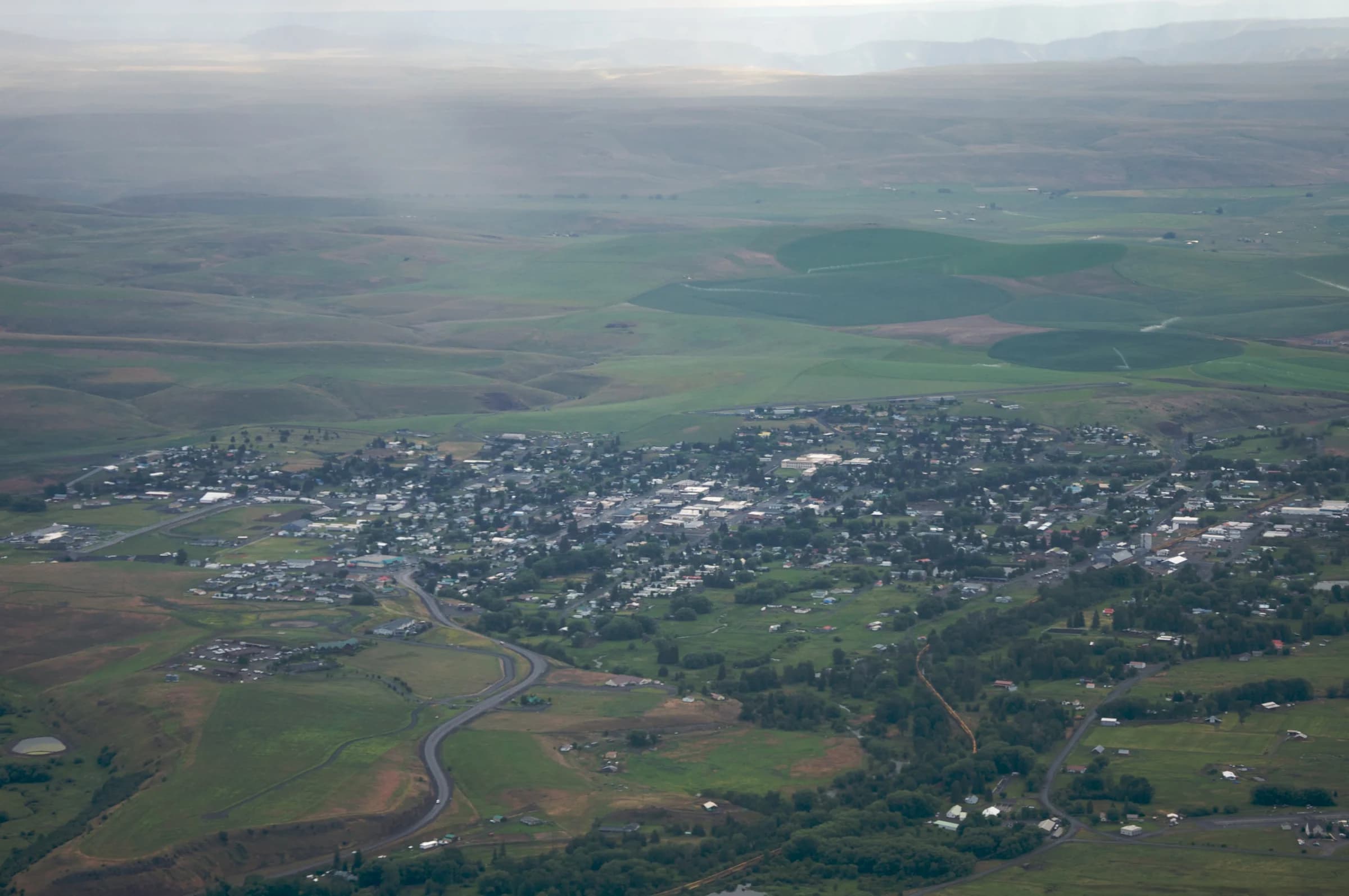
Enterprise and surrounding fields. This county context does not identify available housing or land approved for development. Sam Beebe · 2007-07-08 · CC BY 2.0 · Image & source ↗
The 2025 community health assessment puts housing among the county’s most consequential needs. Its informants connect housing availability to worker recruitment. That makes the question extend beyond the people currently seeking a rental: a difficult move can also become an unfilled position in a service other residents need.
Childcare creates another connection. A March 2025 research toolkit describes Wallowa Memorial working with a local operator to establish childcare for employees’ families, with capacity for about 16 children. The example shows a specific institutional response to a practical obstacle to working. It is not evidence that every family has access to care, or that the arrangement alone resolved recruitment.
The acquisition and repairs are documented; a complete assessment of their consequences remains open. Published rental terms, completed-work counts, funding conditions, and tenants’ own accounts would show more than a statement of intent. The claim that the building contains the area’s last non-subsidized affordable apartments also needs a defined comparison and an inventory.
The 1930s history provides a useful question, not a ready-made verdict on today’s project. What must be invested to keep homes usable, who carries the expense, and what happens to the people living there? The answers can change while the building remains standing.
Sally Donovan and Adrienne Donovan-Boyd; National Park Service · Accessed 2026-09-13
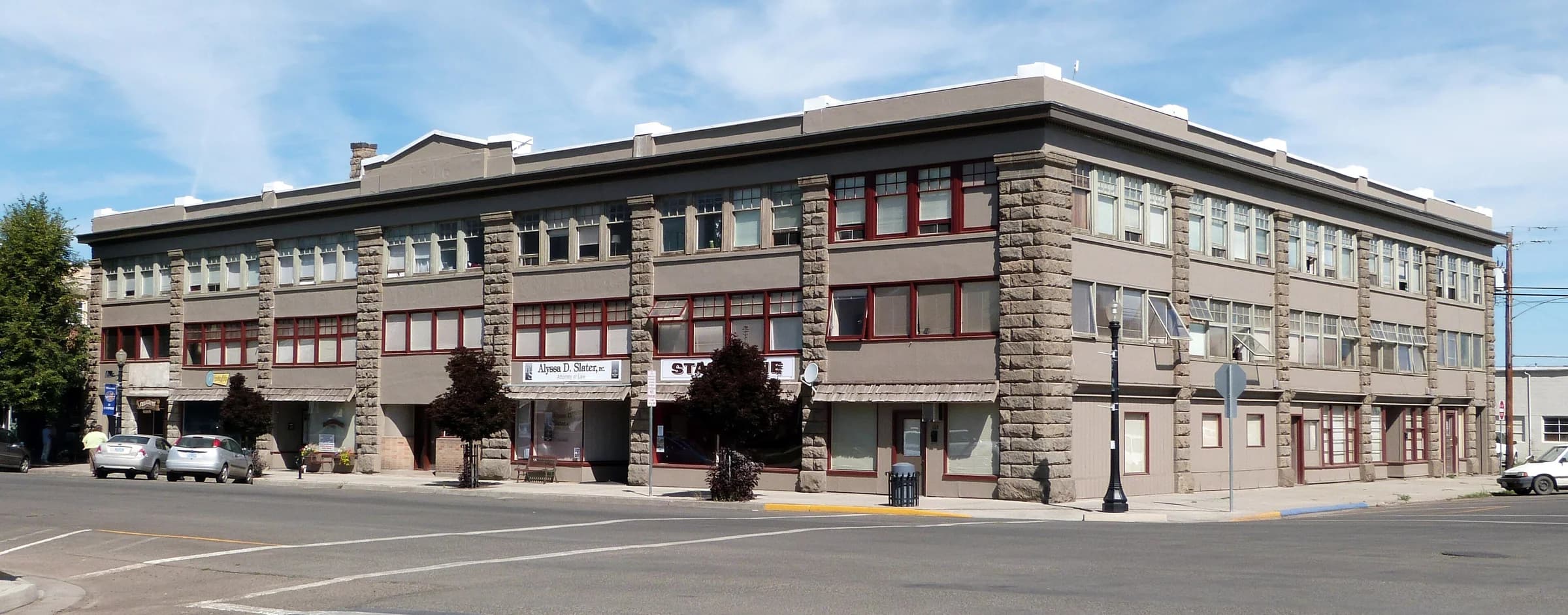
Nomination received January 2012. PDF pages 15–16, City and County Intervention; section 7, architectural description. Historical reconstruction using newspaper articles and commissioner minutes; those underlying items were not separately examined for this edition. Building photographs credited to the preparers, summer/fall 2010; republication permission unverified.
Publication: undated. Locator: City of Enterprise; EM&M Building; paragraphs 1–3. Owner’s account; last remaining affordable claim is not an independently tested inventory.
Shannon Weidemann (McKone), Elkhorn Media Group · Accessed 2026-09-13
Publication: 2026-09-02. Locator: EM&M paragraphs and five-item Current upgrades list. Separate publication, but project account centers on Working Homes; no tenant interviews or independent completion inspection stated.
Oregon Office of Rural Health / Wallowa Memorial Hospital · Accessed 2026-09-13
2025 assessment; PDF pages 1–2, priorities, housing and care access. Survey estimates and key-informant perspectives, not a housing inventory or a referendum. Summary combines data from different reference years.
Robert Barclay et al., Flex Monitoring Team · Accessed 2026-09-13
Publication: 2025-03. Locator: Printed/PDF p. 5, opening Wallowa Memorial paragraph; p. 4 Quality of Life. Short case study, no item-level source for Wallowa interview or outcome statistics. PDF extraction contains an unrelated 2021 text layer; visible March 2025 title governs.
An available dwelling, an affordable monthly cost, and a workable journey to jobs and care are different parts of the same housing question. Start with an Enterprise building, then examine what the countywide figures can tell us.