At Maxville, workers could share a job while their families were separated by race. Later accounts of migration, exclusion, and welcome show why belonging in Wallowa County has never had just one meaning.
Editorial synthesis · 5 minute read · 8 sources
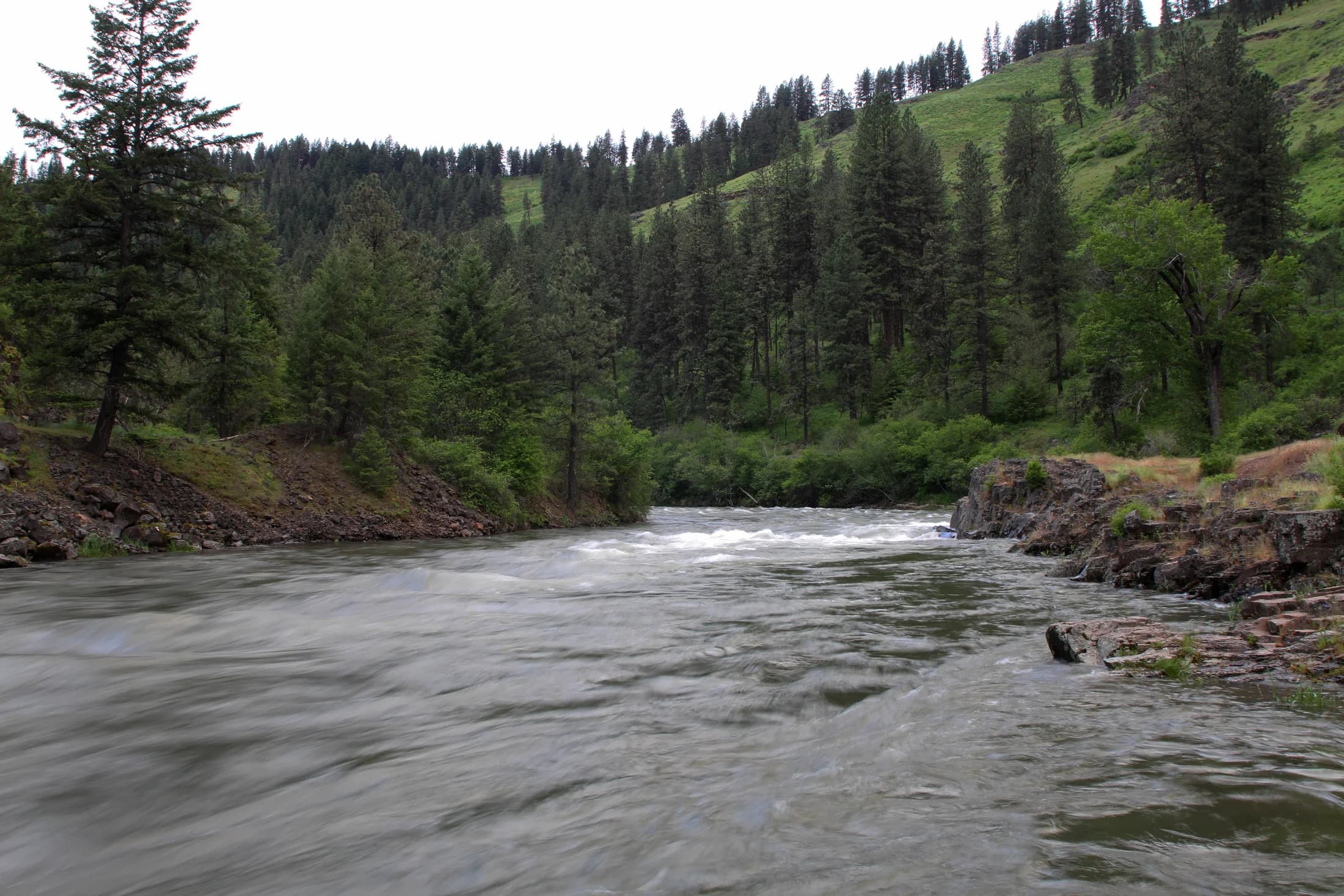
The Wallowa River, shown as regional landscape context. Portraits and historical photographs remain with their original collections. Bureau of Land Management Oregon and Washington · 2017-05-25 · Public domain · Image & source ↗
In this story 6 sections
Work brought people together—and separated them
Bowman-Hicks recruited experienced Black and white workers from the South and Midwest for its logging operations at Maxville. In Gwen Trice’s account, Black workers brought specialized logging and mechanical skills; Greek workers also contributed to railroad construction. The camp’s economy depended on people whose histories reached far beyond northeastern Oregon.
The same company town separated housing and schools by race. People could work together without their families having equal access to the community around the job. Trice also describes baseball as an occasion when some of those divisions were crossed.
The operation closed in 1933 during the Depression, although some families remained later. The work disappeared before the memories did. Descendants and Maxville Heritage’s interpretive work have made those experiences part of the county’s public history.
Maxville makes a simple celebratory account of diversity inadequate. Difference was present, and so was unequal power. Recognizing the workers’ skills does not erase the conditions under which they were required to live.
In the Forest History Society’s exhibit developed with Maxville Heritage, Ruth Carman recalled Lafayette “Lucky” Trice carrying her injured husband out of the forest on his back to the company doctor. Carman was the wife of a white logger; Trice was a Black logger. Her recollection preserves a specific act of dependence and care inside a community organized by racial separation.
The exhibit places accounts of friendship beside occupational inequality: supervisory jobs were more likely to go to white men, while Black workers often performed dangerous cutting and loading work. The rescue does not resolve that contradiction. It shows why neither a story of complete separation nor an uncomplicated story of cooperation can describe the camp.
Remembering who carried an injured person matters differently from counting the company’s employees. It records an obligation between particular people. Keeping that testimony alongside the unequal rules of work and housing lets the reader see relationships that were real without mistaking them for equality.
Historian Marilyn Hulse describes Swedish settlement near Braham Meadows, Basque sheepherders, families from Kentucky and West Virginia, and Greek railroad workers. Her retrospective sketches several migration routes rather than one uniform settler culture.
Rich Wandschneider’s review of the Findley family history adds another complication: households moved repeatedly within Oregon before and after reaching the valley. Arrival was not always the end of a journey or the founding of an unchanging life.
These accounts suggest a county formed through movement as well as rootedness. Someone’s relationship to the place might be carried through work, kinship, language, religion, or repeated returns. None of those connections can be reduced to the length of time a surname has appeared in a local directory.
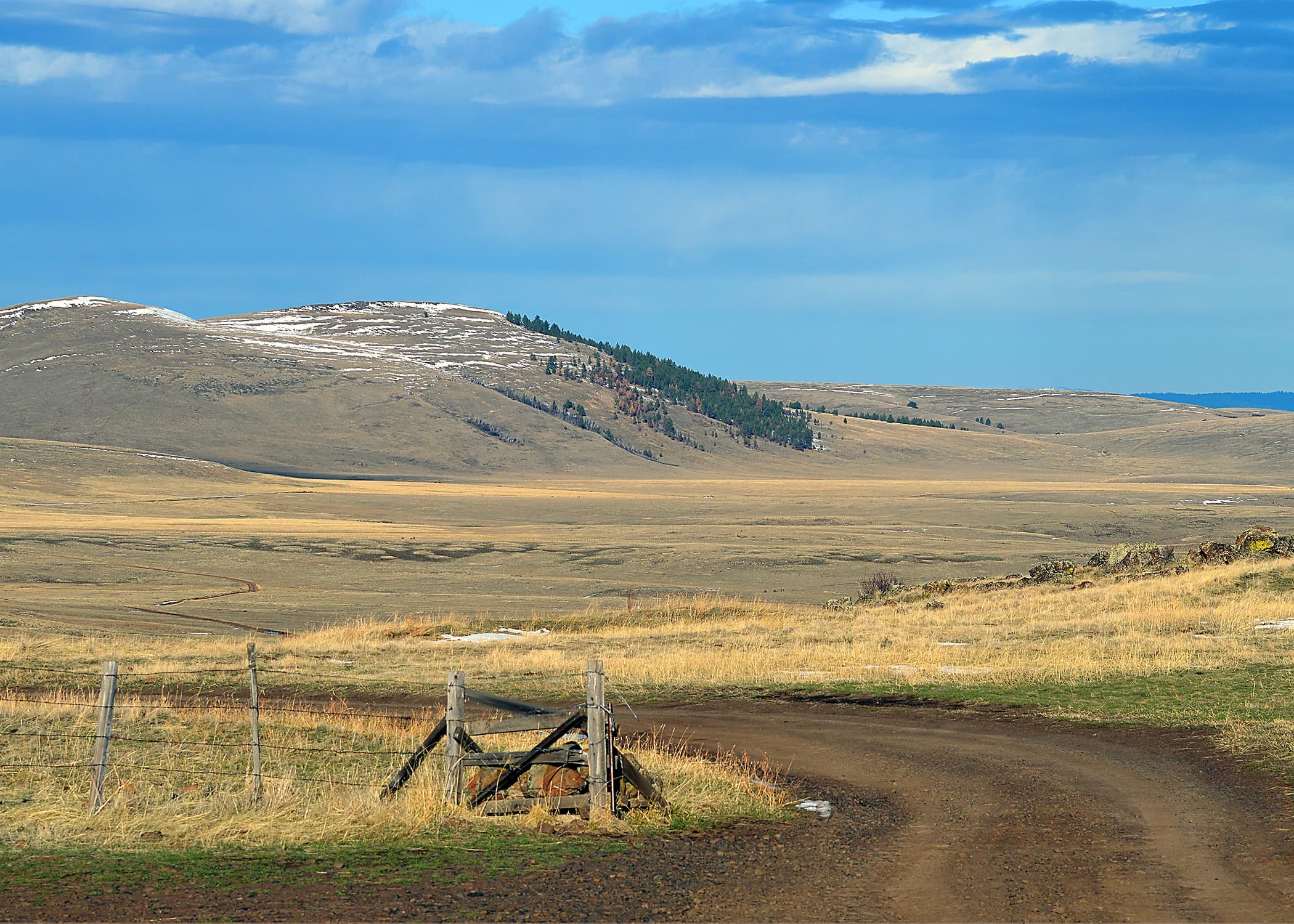
A road, fence, and open prairie on the Zumwalt. Present-day regional landscape, not the site of any migration or exclusion episode described here. Rick Swart, Oregon Department of Fish and Wildlife · 2015-11-15 · Public domain · Image & source ↗
In her account of a 1901 petition, Hulse describes settlers seeking federal action to prevent tribal people from returning to the valley. The petition turns the abstract idea of exclusion into an organized request: some residents wanted an authority outside the county to restrict other people’s access to their homeland.
Hulse’s retrospective is a guide to the episode, not a substitute for reading the original petition, its signatures, and the federal response. Nor does it establish that every settler held the same view. It does show why a story of neighborliness must also ask who was permitted to become a neighbor.
The distinction between being new to a town and returning to a homeland matters here. Treating all forms of arrival as equivalent would hide the earlier removal and the continuing ties that the petition sought to interrupt.
Kiyomi Oliver describes a more personal negotiation in Maxville Heritage’s Hello Neighbor collection: “I tried not to stand out.” She also describes being invited to share tea, origami, and language. In her account, recognition of her ancestry became part of acceptance rather than something she had to conceal.
Gwen Trice recorded participants individually after the pandemic disrupted the project’s earlier plans; the project announced an exhibit for 2022. These are named people describing their experiences, not a representative survey of all residents.
Oliver’s account raises a different test of belonging from simply being tolerated. Is there room for what a person brings with them? Can they contribute without being asked to erase the difference that makes their contribution their own?
People Like Us describes its work around rural 2SLGBTQIA+ support and connection. Nez Perce Wal’áwa Homeland’s plan addresses presence and homecoming across generations. Their purposes and communities are distinct, but both place deliberate relationship-building inside the contemporary county.
The existence of such organizations does not prove that exclusion has ended. It shows people doing work that would be unnecessary if welcome could always be taken for granted. A gathering, a support network, or a long-term plan can make participation possible where a general statement of friendliness cannot.
Read from Maxville to these present-day organizations, belonging looks less like a fixed county trait than an ongoing set of decisions. Who is asked to participate, whose work is valued, who can remain, and who gets to describe the place are questions each generation answers in practice.
Forest History Society, with Maxville Heritage Interpretive Center · Accessed 2026-09-13
Digital exhibit curated by Yolanda Hester and Elizabeth Flowers, with Gwendolyn Trice and Sierra Newby-Smith. Locator: Working in Lumber, Ruth Carman’s recollection. Oral testimony is attributed as recollection, not silently converted into an independently dated incident report.
Organization’s own description of rural 2SLGBTQIA+ support; September 2026 event notice read on September 13, 2026. An event notice is not confirmation that it occurred.
Adopted 2023. Presence and belonging; 10-, 30- and 100-year horizons. The organization’s plan connects homecoming with family life, work, cultural practice and stewardship over generations. It is a nonprofit’s own plan; the organization and sovereign tribal governments are distinct.